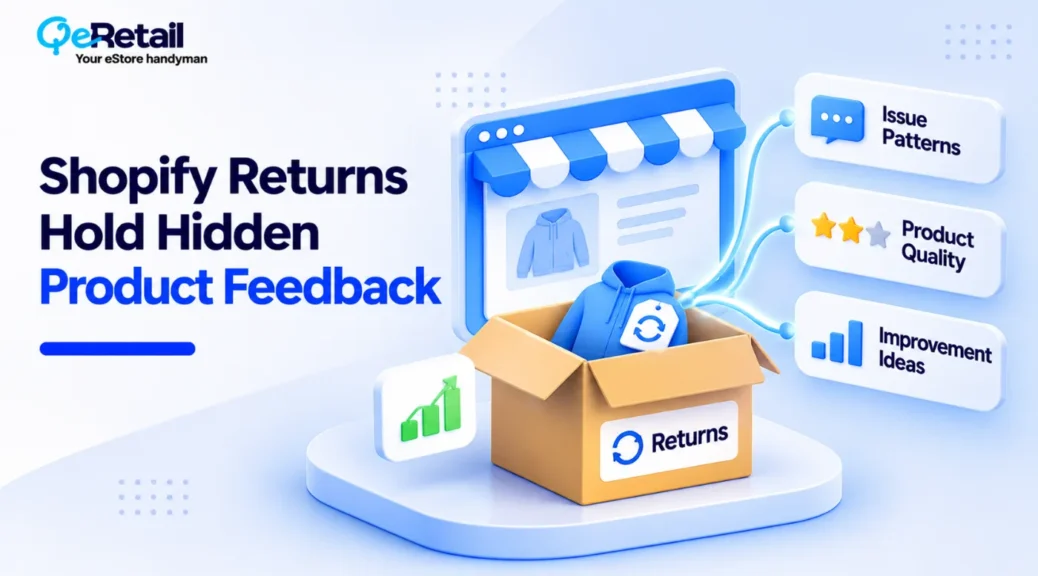
When your returns are high, the focus is on the shipping rates or, often, tightening the return window. In fact, retailers lose more than $351 billion in sales every year to returns.
That fixes the wrong thing. Returns start upstream, in the product pages, sizing info, and photos your customer reads before buying.
The gap is simple. Your store records every return, but almost nobody records why. So you pay for the same mistake again next month.
This guide shows you how to turn returns into data you can act on, even with a small team.
Key Action Points:
- Record a specific reason on every return, starting this week
- Fix your three worst-returning products before touching your policy
- Rewrite product pages using your customers’ own words
- Check your ads for promises the product cannot keep
- Offer exchanges before refunds

Why Most Shopify Stores Misread Returns?
Returns are not a shipping cost. They are a message from your customer.
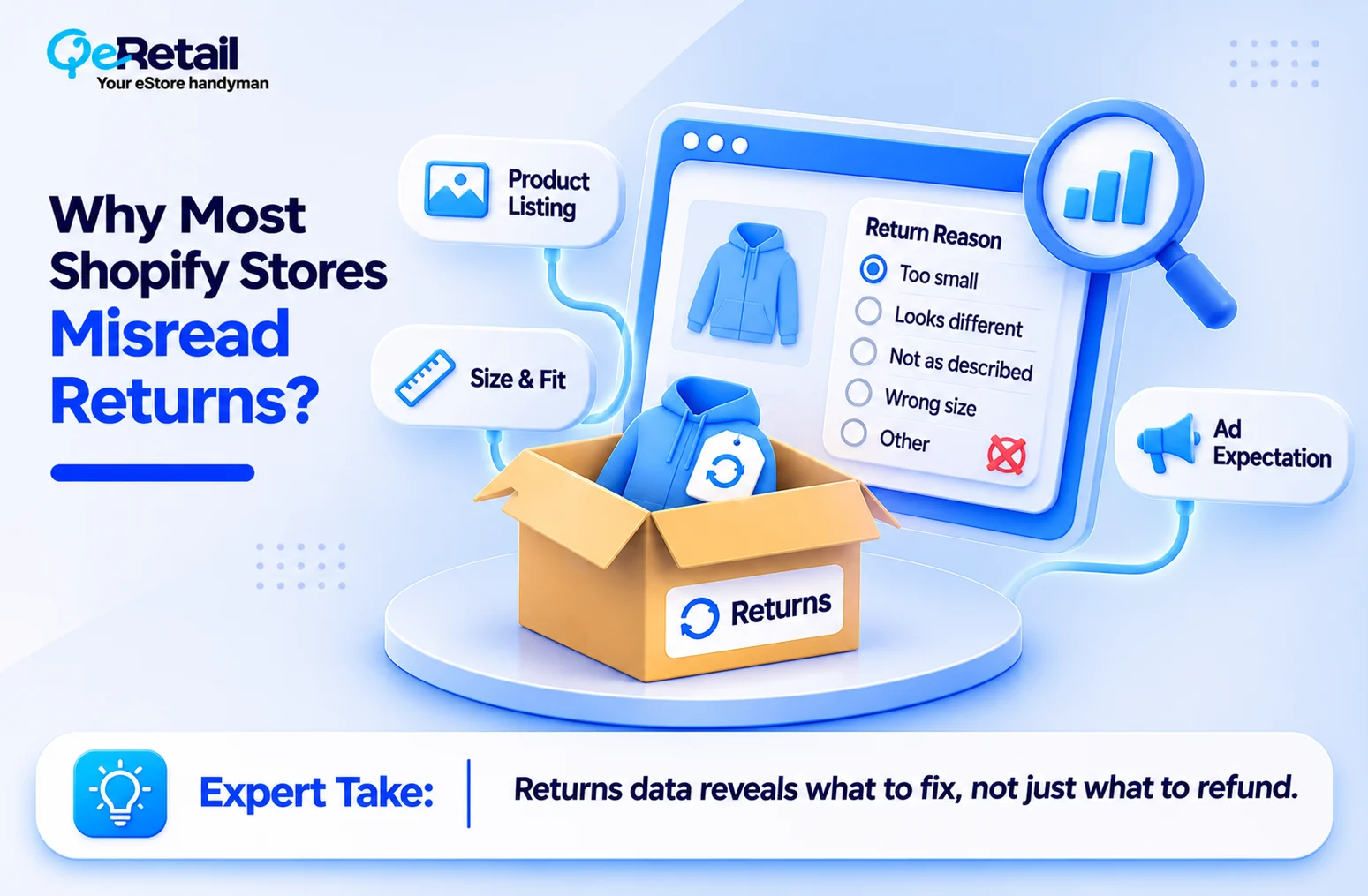
Every returned order says something specific: the photo looked different, the size chart was confusing, the description overpromised. Most stores never hear it, because the message gets filed under “refunded.”
The Reason Code Black Hole
Open your Shopify admin and check your last 20 returns. How many have a clear reason attached? (If the answer is “a few,” you are guessing at the biggest leak in your store.)
Customers pick the first option in a dropdown to get their money fast. “Other” tells you nothing, so you end up with refunds and no pattern.
Expert Take:
A returns report is not returns data. A report shows how many orders came back. Data shows which product, which size, and which ad set the wrong expectation. If your reasons are vague, fix the form before anything else.
Quick Wins:
- Replace “Other” with five specific reasons, such as “Too small” or “Looks different from photos”
- Tag each return with its product and original traffic source
Blaming Shipping for a Page Problem
Faster shipping does not reduce returns. A clearer product page does.
McKinsey’s 2025 research found retailers recover only about 50 %of a returned product’s worth, because the returns process is slow and static. Half the value, gone. On a $60 item, one return can wipe out the profit from several clean orders.
So the cheapest return is the one that never happens.
Expert Take:
Free returns do not cause high return rates. Unclear products do. Stores that kill free returns often lose conversions and keep the same confusing pages. Fix the cause, then judge the policy.
Quick Wins:
- Rank products by return count, not revenue
- Compare your top three offenders’ pages to the reasons customers gave
The 3-Step Returns Data System
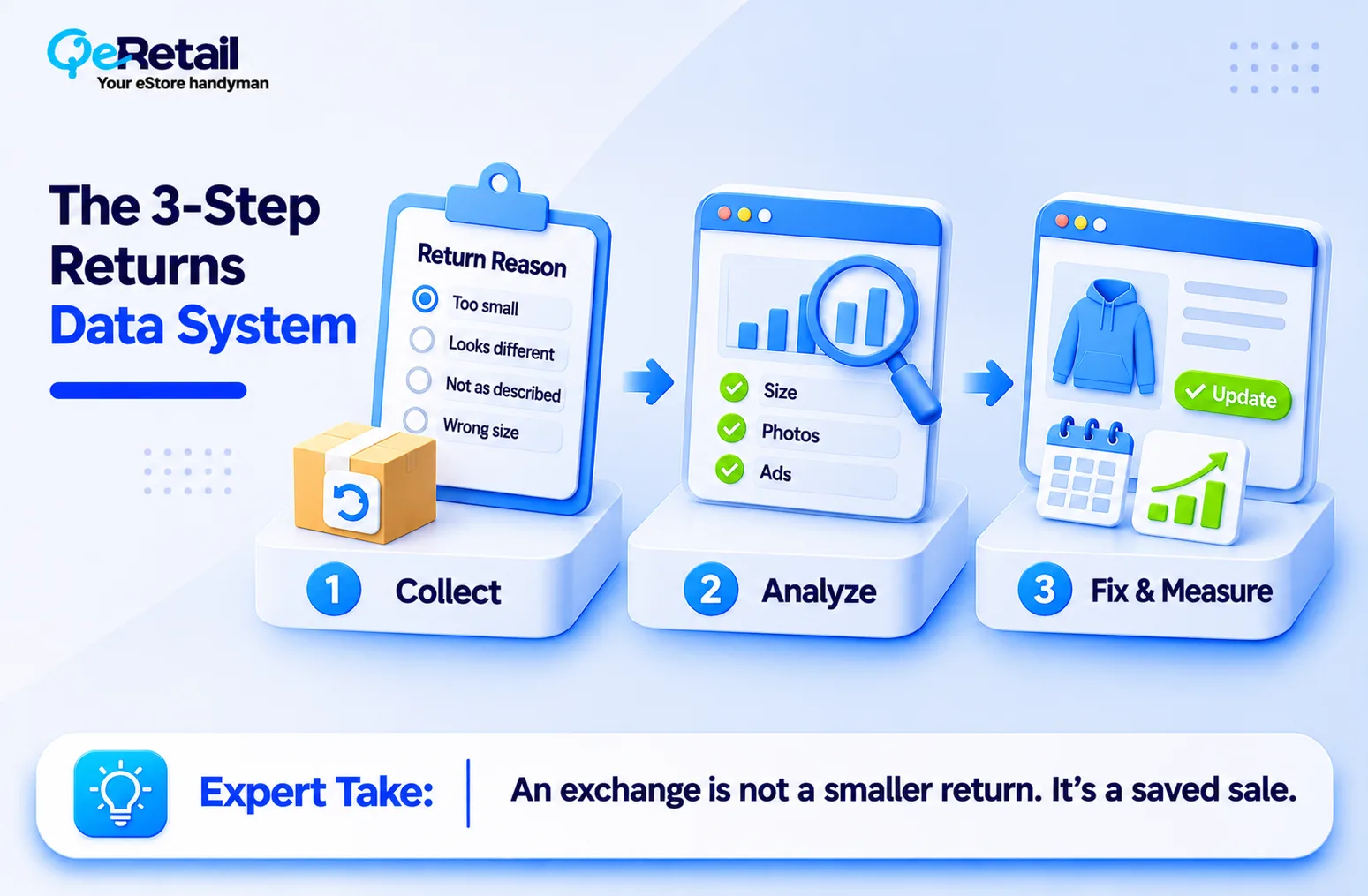
You do not need a data team. You need a 20-minute habit every Monday: collect, read, fix.
Step 1: Collect Clean Reasons
Customers will not write essays, so make it easy. Offer five or six tight options plus one open box, and make sure the reason travels with the order so you can filter by product later.
Expert Take:
Ask for the reason before showing the refund button. Put them together, and customers click fast to get paid.
Quick Wins:
- Edit your returns form inside your returns app settings
- Export returns to a sheet weekly
Step 2: Read the Pattern, Not the Average
Your overall return rate hides everything. A store at 12% can have one product at 40% and 10% near zero. Sort by product and reason, then look for clusters.
Start with these quick wins:
- Size clusters: Add a “runs small” note or model measurements, and cut sizing returns without touching policy
- Photo mismatch: Add real-light photos where color is the complaint
- Ad mismatch: Check whether one campaign promises something the page does not deliver
Expert Take:
AskYour ad creative can cause returns. If a Meta ad shows a product bigger or brighter than reality, you pay for the click and again for the refund. Match the ad to the product, even if the honest version converts slightly less.
Quick Wins:
- Flag any product above your average return rate every Monday
- Review ad creative for products with color or size complaints
Step 3: Fix Upstream, Then Measure
Change one thing per product. Update the sizing note, then watch the next 30 orders. If the reason drops, you found it.
Catch problems earlier, too. Send a short email three days after delivery asking if the product matches expectations. A customer who replies “too small” can be steered to an exchange, which keeps the revenue. For more funnel fixes, see our guide to Shopify checkout optimization.
Expert Take:
An exchange is not a smaller return. It is a saved sale. Lead with the exchange, keep the refund one click away, and watch how many customers take the first option.
Quick Wins:
- Change one product page at a time
- Compare return reasons 30 days before and after each change
What to Do at Your Revenue Tier to Reduce Shopify Returns?
Returns hurt differently by size, so your first move should match your stage.
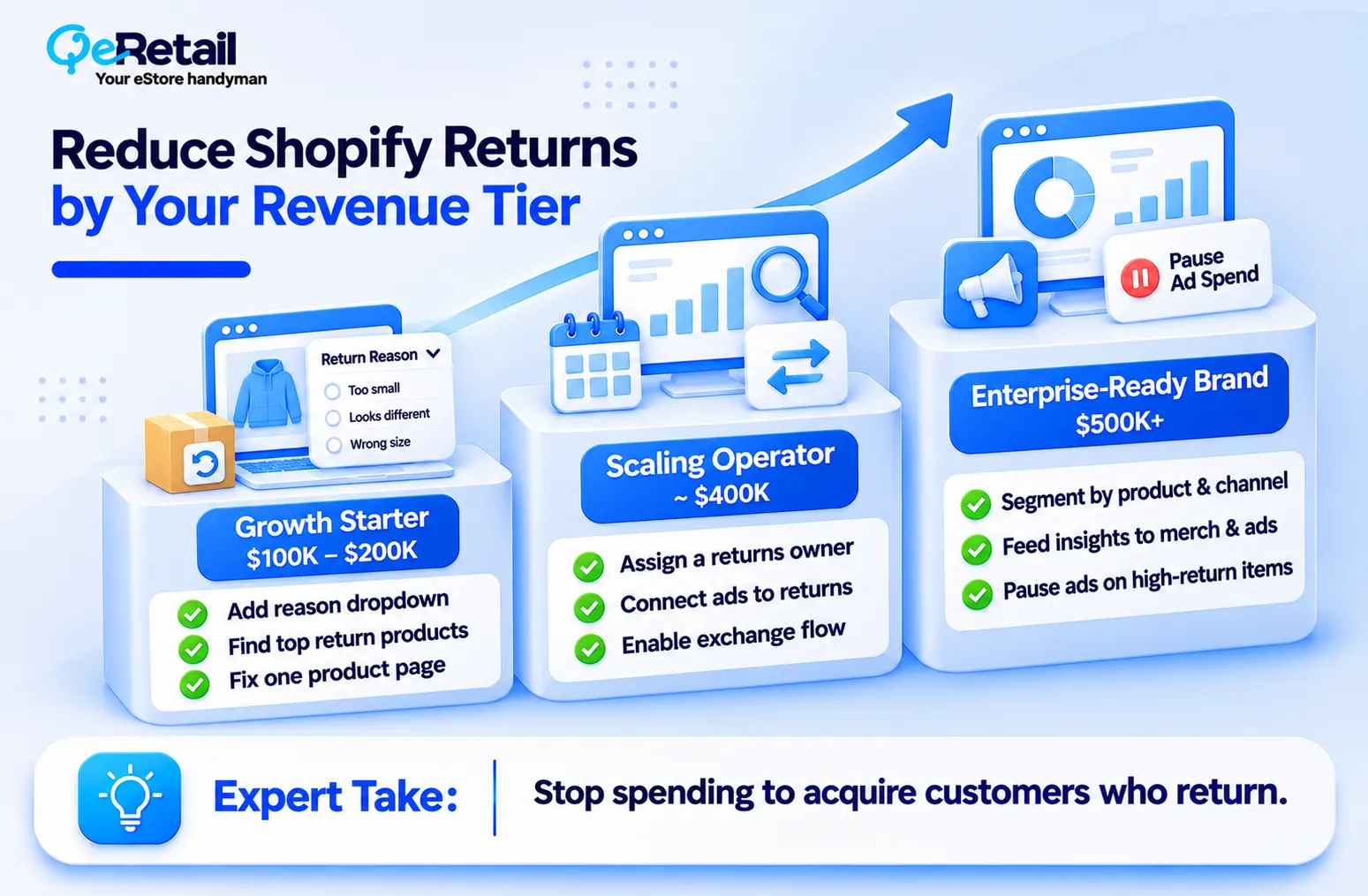
The Growth Starter (100K-200K): Focus on Reasons!
You likely run returns by email and a spreadsheet. That is fine. What hurts is not knowing which product costs you.
- Add a reason dropdown: Five specific choices, no “Other”
- Name your top three offenders: Count returns by product for 90 days
- Fix one page this month: Start with the worst product
What can Shopify store owners do?
Spend one afternoon on your returns form and one on your worst product page.
The Scaling Operator (400K): Create a Weekly Review!
Volume now makes patterns visible. The risk is that nobody owns them.
- Assign an owner: One person reads returns data every Monday
- Connect ads to returns: Tag returns by campaign source
- Build an exchange flow: Offer swaps before refunds
What can Shopify store owners do?
Give returns a named owner and a weekly slot. Without both, the data sits unread.
The Enterprise-Ready Brand (500K+): Focus on Prevention
You have enough orders to see which products and channels drive returns. Segment by category and acquisition source, then feed it into merchandising and ad budgets. Also read how to reduce Shopify customer acquisition cost.
What can Shopify store owners do?
Pause ad spend on chronic-return products until the page is fixed. Acquiring a customer who returns the order is the most expensive growth you can buy.

Stop Paying for Returns. Start Reading Them.
Most stores treat returns as a cost to absorb. They negotiate carriers, shorten windows, and hope the rate drops. If your team still stares at a refund total with no reasons attached, you didn’t fix returns, you just reshuffled the shipping bill.
The better path starts upstream. When returns become feedback, every refund is a free product lesson. Pages get clearer, ads get honest, and exchanges replace refunds. The gains compound, while stores that only process returns keep paying for the same mistake.
Need a partner who can set up the tracking and fix the pages that leak profit?
Book a free consultation, and we will review your last 90 days of returns and name the three products costing you the most.
Frequently Asked Questions
What is a good return rate for a Shopify store?
How do I reduce returns on my Shopify store?
Should I stop offering free returns?
How much does a return actually cost?
Can a small team manage returns data?
Table of Contents