A customer lands on your Shopify store looking for a particular product. They find it, compare a few options, and leave without buying. Sometimes the reason is price or timing. Other times, they simply cannot find the information they need to make a confident decision.
Perhaps the product page does not explain which option suits their needs. The relevant buying guide is buried in the blog section, or the collection page offers dozens of products without helping shoppers narrow their choices.
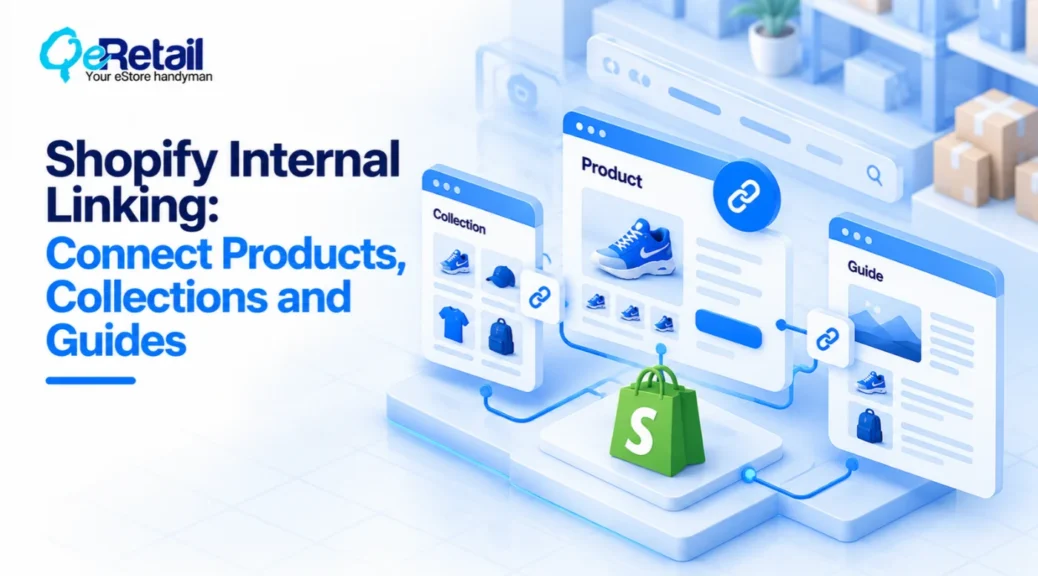
For many Shopify merchants, links are added when a new page is published or when an SEO checklist calls for them. A more useful approach is to treat internal links as part of the store’s architecture: they connect product discovery, category exploration, product education, and the final buying decision.
Product discovery remains a challenge across eCommerce. Baymard Institute’s 2025 benchmark found that 58% of desktop eCommerce sites and 78% of mobile sites had poor-to-mediocre product-list UX.
A strong internal linking architecture does more than help search engines discover pages. It gives every important page a meaningful role in the customer’s journey.

Key Action Points Summary
- Organize internal links around customer needs, not just page types.
- Connect buying guides to relevant collections and specific products.
- Give collection pages a clear role between broad discovery and product selection.
- Add contextual links between related products where they genuinely help shoppers.
- Use descriptive anchor text that explains what customers will find next.
- Keep product URLs consistent and avoid unnecessary duplicate pathways.
- Identify important pages that receive little or no internal linking.
- Review links when products are discontinued, collections change, or buying guides become outdated.
- Track whether visitors move from informational content to useful commercial pages.
5 Shopify Internal Linking Problems That Can Limit Product Discovery
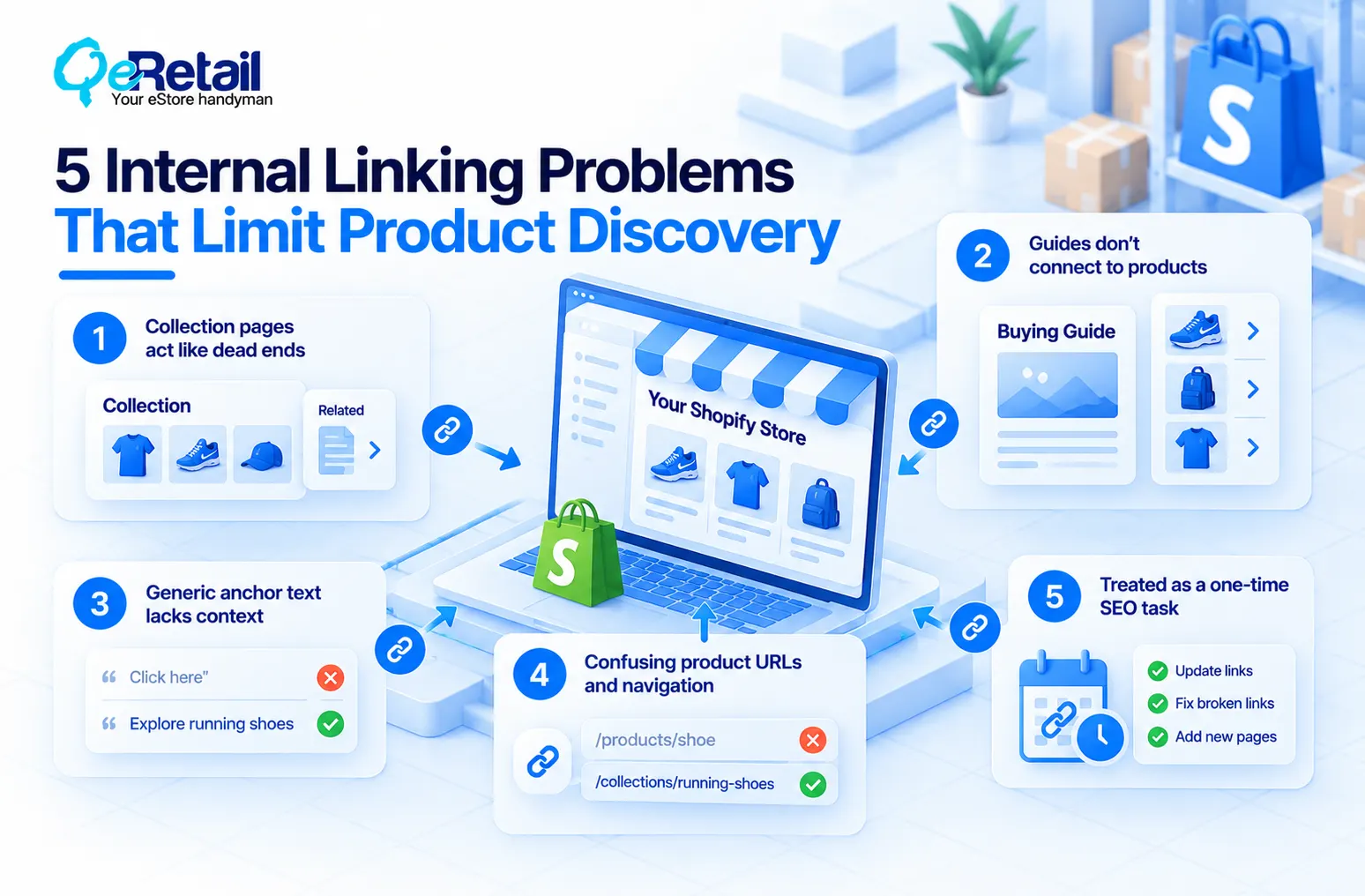
1. Collection Pages Acting Like Dead Ends
Collection pages bring similar products together, but a product grid alone may not help shoppers decide what to explore next. When customers need more guidance, they may leave the collection to search elsewhere.
For example, a skincare collection could link to a guide on choosing cleansers for different skin types. This gives shoppers a useful next step without interrupting their browsing.
What Should Shopify Stores Do To Improve?
- Add useful context to key collections
- Link to relevant buying guides
- Connect collections customers may compare
- Make important subcategories easy to find
- Provide next steps beyond product grids
Quick Win:
Add two or three relevant links to one priority collection, such as a buying guide, related category, or comparison page.
2. Buying Guides Educating Customers Without Helping Them Choose
Buying guides attract shoppers who are still comparing options. But when an article explains what to look for without linking to relevant products or collections, readers must do the next stage of research themselves.
A guide to choosing a mattress, for instance, could link to a collection organized by mattress type, followed by products that match the features discussed. The advice remains useful while giving interested readers a clear path forward.
The goal is not to turn every article into a sales pitch. It is to connect helpful information with relevant products when the reader is ready to explore them.
What Should Shopify Stores Do To Improve?
- Identify the main question each guide answers
- Link to the most relevant collection
- Recommend products that match the advice
- Use descriptive anchor text
- Update links when product ranges change
Quick Win:
Review five important buying guides and add relevant product or collection links where readers are likely to start comparing options.
3. Internal Links Using Generic Anchor Text Instead of Clear Context
Links such as “click here” or “learn more” tell shoppers very little about what comes next. Descriptive anchor text makes destinations easier to understand and gives search engines useful context. The wording should fit the surrounding content naturally, rather than repeating the same keyword across every page.
What Should Shopify Stores Do To Improve?
- Replace vague labels with descriptive link text
- Match anchor text to the destination
- Vary wording naturally across pages
- Avoid unrelated keyword links
- Give image links and buttons clear purposes
Quick Win:
Replace generic phrases on priority pages with specific descriptions, such as “explore compact air fryers” or “read our cookware buying guide.
4. Product URLs and Navigation: Creating Confusing Paths
As a Shopify catalog grows, shoppers may reach the same product through collections, blog posts, recommendations, and campaign pages. That flexibility is useful, but outdated links and inconsistent URL choices can create broken or confusing paths.
A consistent linking approach helps customers reach the intended destination and makes important pages easier for search engines to discover. It also means reviewing links whenever products or collections change.
What Should Shopify Stores Do To Improve?
- Use consistent product URLs in internal links
- Update links after handle or collection changes
- Keep navigation labels clear
- Check custom links for valid destinations
- Avoid unnecessary URL variations in custom implementations
Quick Win:
Check a sample of product and collection links. Fix broken destinations and confirm each link points to the intended page.
5. Internal Linking Being Treated as a One-Time SEO Task
Internal linking often gets attention during a launch or SEO audit, then falls off the priority list. Meanwhile, products are discontinued, collections change, and new buying guides appear.
Over time, articles may recommend unavailable products, while new pages receive few links from the rest of the store. These gaps can make useful content harder to discover.
Keeping the structure healthy requires shared responsibility. Content teams can maintain article links, merchandising teams can review product relationships, and developers can address issues involving themes or custom functionality.
What Should Shopify Stores Do To Improve?
- Review links during content updates
- Fix broken links and outdated recommendations
- Connect new pages to relevant existing content
- Monitor pages that are difficult to discover
- Assign ownership for ongoing link maintenance
Quick Win:
Add an internal linking check to your publishing process. Before a buying guide goes live, confirm it links to relevant products or collections and receives a link from an appropriate existing page.
How QeRetail Helps Shopify Stores Build a More Connected Storefront
A useful internal linking structure depends on more than adding hyperlinks to page content. The connections need to reflect how the catalog is organized, what customers need to know, and how the storefront presents products and educational resources.
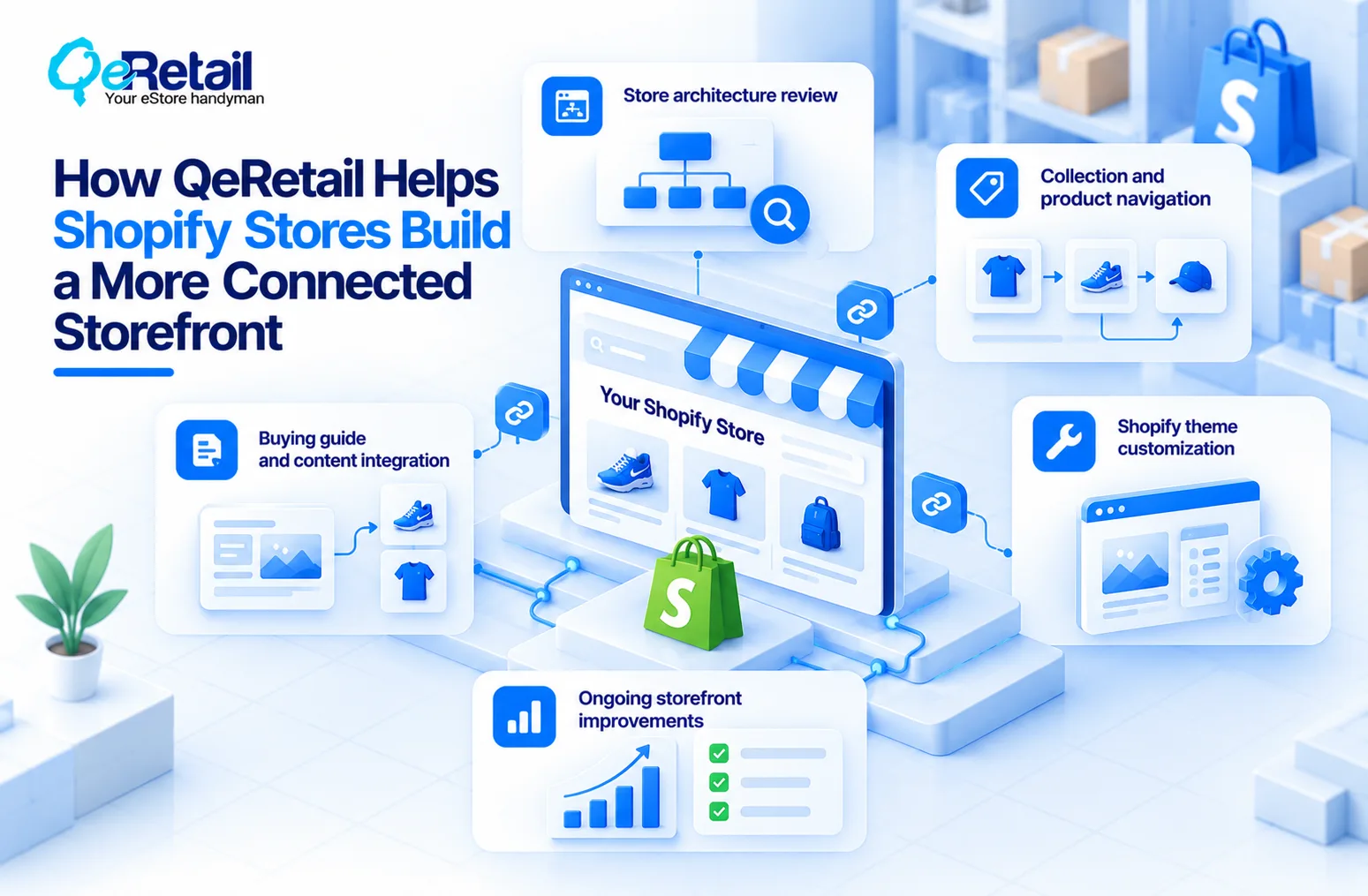
QeRetail helps Shopify merchants improve storefront organization and connect content, collections, and product discovery through practical eCommerce solutions.
1. Shopify Store Architecture Review
Our team reviews your existing navigation, collections, product templates, and content structure to identify gaps in how important pages connect. This creates a clearer picture of where customers may encounter dead ends or struggle to discover relevant products.
2. Collection and Product Navigation Improvements
We help refine the way collections, related products, and category pathways work together. Where theme limitations or custom requirements affect navigation, our team can assess improvements that make the browsing experience more coherent.
3. Buying Guide and Content Integration
We help align educational content with relevant product and collection pages, so buying guides serve as useful discovery paths rather than isolated blog articles. This includes reviewing content relationships and identifying opportunities to improve the transition from research to product evaluation.
4. Shopify Theme Customization
When existing theme components do not support the intended navigation or related-content experience, we can help implement suitable customizations. The objective is to make relevant pathways easier to maintain while preserving the store’s visual identity and shopping experience.
5. Ongoing Storefront Improvements
As product catalogs and content libraries expand, internal linking needs to evolve with them. We help merchants identify areas for improvement and incorporate practical updates into broader storefront optimization work.

Conclusion
Internal linking works best when it reflects the decisions customers need to make, not simply the pages a store happens to contain. Connecting buying guides to collections, collections to products, and product pages to relevant alternatives gives shoppers clearer routes through the catalog while helping search engines understand the relationships between pages.
For Shopify merchants, the real opportunity is to make those connections part of everyday merchandising, content planning, and storefront development. QeRetail helps businesses improve their Shopify experience with practical solutions tailored to their store structure and growth goals.
Contact us to discuss how a more connected Shopify storefront can support product discovery and a clearer buying journey.
Frequently Asked Questions
What Is Internal Linking Architecture in Shopify?
How Should Shopify Buying Guides Link to Products and Collections?
Do Internal Links Help Shopify SEO?
How Many Internal Links Should a Shopify Page Have?
How Often Should a Shopify Store Audit Its Internal Links?
Table of Contents