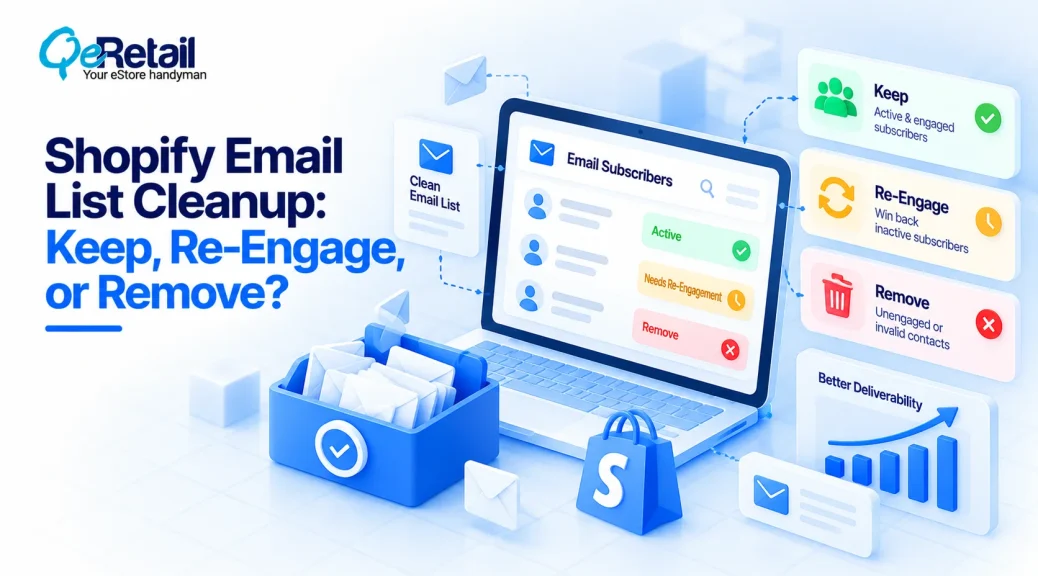
Growing an email list feels like progress. More subscribers mean more opportunities to promote products, recover customers, and generate repeat purchases. But a larger list does not automatically create a more valuable audience.
Over time, stores accumulate invalid addresses, disengaged subscribers, outdated consent records, and customers who no longer respond to marketing emails. Continuing to send campaigns to everyone can make it harder to identify which contacts are genuinely interested.
The challenge is knowing what to do with each group. Some contacts should be suppressed immediately, others need a defined sunset process, and some may still be worth re-engaging.
According to the DMA’s 2025 Email Benchmarking Report, the average unique click rate reached 2.3% across its industry dataset. The report draws on anonymized data from seven email service providers and covers emails sent during 2024.
A healthier Shopify email list is not necessarily smaller. It is better maintained, permission-based, and aligned with customer behavior.

Key Action Points Summary
- Suppress invalid addresses, hard bounces, and spam complainants
- Keep unsubscribe and consent records accurate across platforms
- Measure engagement using clicks, purchases, and other reliable activity signals
- Define sunset criteria based on inactivity and sending frequency
- Re-engage suitable inactive subscribers with relevant, limited campaigns
- Segment customers using purchase history and email engagement
- Avoid treating email opens as the only sign of interest
- Automate recurring list reviews and suppression rules
- Review sender reputation and campaign performance after cleanup
- Recheck list quality whenever you migrate platforms or change integrations
5 Shopify Email List Problems That Require Different Cleanup Decisions
Not every subscriber problem requires the same response. Some contacts need immediate suppression, while others may benefit from a targeted re-engagement campaign or a clear sunset policy. The key is knowing which action fits each situation.
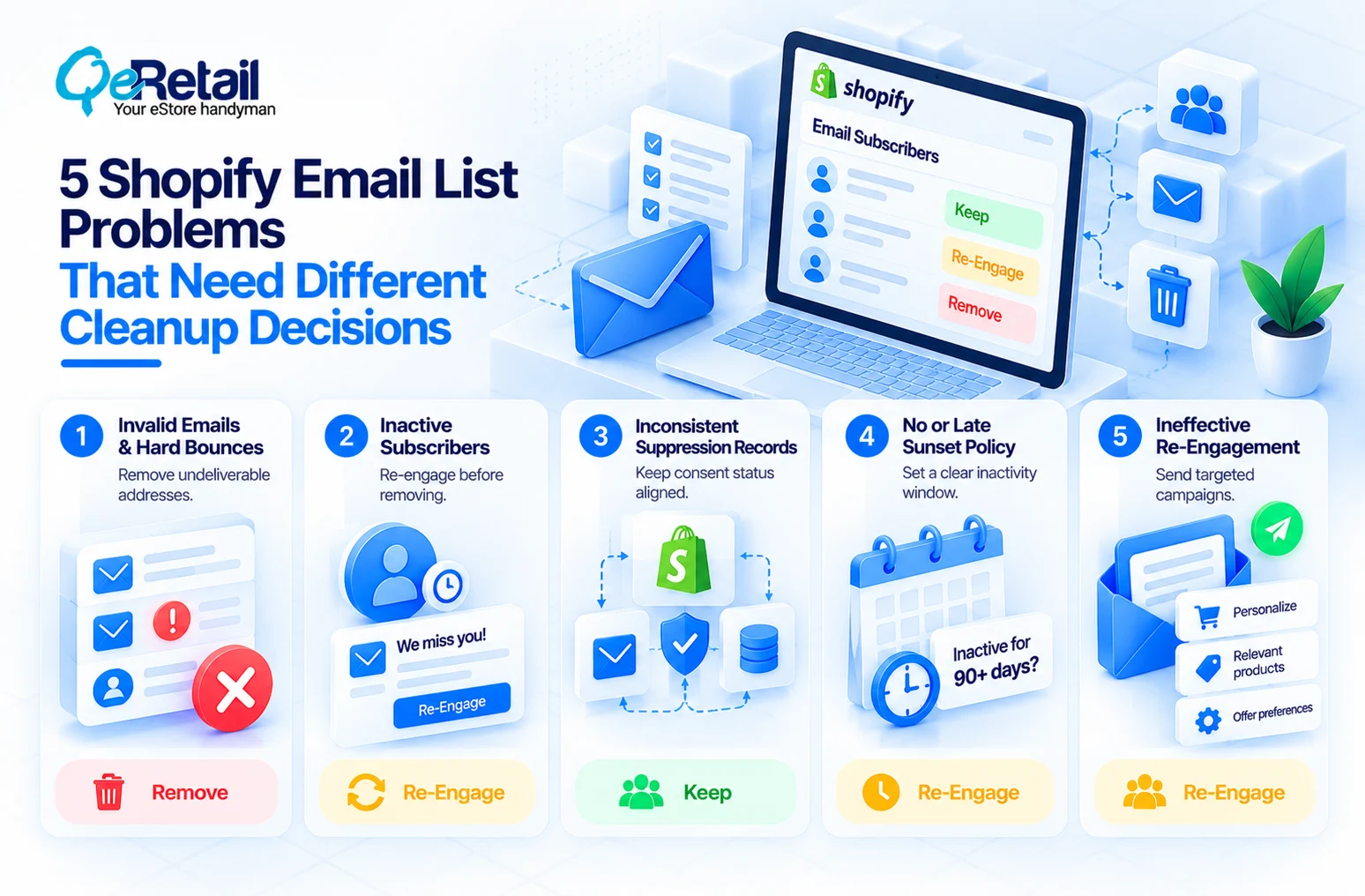
1. Invalid Email Addresses and Hard Bounces Remaining in Your List
An email address that repeatedly fails delivery should not remain eligible for routine marketing campaigns. Invalid addresses and permanent delivery failures can create avoidable deliverability problems.
Shopify automatically suppresses addresses that consistently bounce when using Shopify Messaging. However, merchants using multiple marketing tools should verify that suppression records remain consistent across platforms.
What Should Shopify Stores Do To Improve?
- Suppress hard-bounced addresses promptly
- Monitor bounce patterns across campaigns
- Review suspicious signup sources and imported contacts
- Use double opt-in where appropriate
- Never purchase or rent subscriber lists
Quick Win:
Review recent bounce reports and confirm that permanently undeliverable addresses are excluded from future sends. If you use multiple email platforms, verify that suppression status is synchronized.
2. Inactive Subscribers Distorting Campaign Performance
Not every subscriber who stops clicking has lost interest in your brand. Some customers purchase occasionally, browse your store directly, or engage through other channels.
The real problem is treating inactivity as a single signal. Removing every contact who has not opened a recent email could mean losing customers who still have purchase potential.
Look beyond opens. Clicks, purchases, and other meaningful activity can provide better context, particularly because email privacy features may distort open tracking.
What Should Shopify Stores Do To Improve?
- Segment subscribers by recent clicks and purchases
- Consider order history and customer lifecycle stage
- Avoid relying on open rates alone
- Separate new subscribers from long-term inactive contacts
- Review engagement over an appropriate time window
Quick Win:
Identify subscribers with no recent clicks or purchases. Check their signup date and order history before deciding whether to re-engage them or begin the sunset process.
3. Suppression and Unsubscribe Records Becoming Inconsistent
A customer unsubscribes from your newsletter, but their address remains active in another connected platform. Later, an imported list or automated campaign brings that contact back into a marketing audience.
This can happen when Shopify stores use separate tools for email campaigns, loyalty programs, and customer data. Without consistent suppression records, even a carefully cleaned list can develop the same problem again.
What Should Shopify Stores Do To Improve
- Keep consent status accurate across connected tools
- Respect unsubscribe requests and spam complaints
- Prevent suppressed contacts from re-entering marketing segments
- Record when and how subscribers gave consent
- Verify suppression records after imports and migrations
Quick Win:
Test whether an unsubscribed contact can re-enter an active marketing segment through an app, CSV import, or automation. Correct the workflow before sending another campaign.
4. Sunset Policies Missing or Applied Too Late
Sunsetting means ending routine marketing sends to subscribers who remain inactive for a defined period. Unlike immediate suppression for an unsubscribe or hard bounce, sunset decisions generally depend on engagement history and customer context.
Without a clear policy, merchants may keep emailing inactive contacts indefinitely or remove them before accounting for their buying cycle.
For example, a customer purchasing seasonal products may naturally go months without interacting with campaigns. A replenishment-focused store may need a much shorter review window.
What Should Shopify Stores Do To Improve?
- Define inactivity using meaningful engagement signals
- Match sunset windows to the product purchase cycle
- Separate recent customers from long-term inactive subscribers
- Stop routine marketing when sunset criteria are met
- Review and document the policy periodically
Quick Win:
Establish an inactivity window that fits your store’s buying cycle. Identify eligible subscribers, offer an appropriate re-engagement opportunity, and sunset those who remain inactive.
5. Re-Engagement Campaigns and Segmentation Missing the Mark
A re-engagement campaign gives suitable inactive subscribers an opportunity to reconnect with your brand. But sending everyone the same discount ignores why they stopped interacting in the first place.
A previous customer may respond to relevant product recommendations, while someone who subscribed for a particular collection may prefer updates about new arrivals. Others may simply no longer want marketing emails.
Re-engagement should be a targeted test, not a reason to keep sending indefinitely.
What Should Shopify Stores Do To Improve?
- Segment inactive subscribers by purchase and engagement history
- Personalize content around relevant products or interests
- Make the value of staying subscribed clear
- Provide an easy way to update preferences or unsubscribe
- Set a clear endpoint for unsuccessful re-engagement
Quick Win:
Select a small, eligible inactive segment and send a relevant campaign. Measure clicks and purchases, then sunset contacts who remain inactive under your established policy.
How QeRetail Helps Shopify Stores Improve Email List Management
Effective email list cleanup depends on more than removing contacts from a campaign. It requires accurate customer data, reliable integration between platforms, and workflows that consistently apply the right rules.
QeRetail helps Shopify brands assess their store operations and identify opportunities to improve the way customer information supports marketing activity.
#1. Shopify Customer Data and Email Integration
Our team reviews how customer information moves between Shopify and connected marketing tools. We help identify inconsistencies that can affect subscriber segmentation, consent status, and campaign targeting.
#2. Automated Segmentation and Cleanup Workflows
We help merchants structure customer segments and repeatable workflows around engagement, purchase history, and subscriber status. This reduces dependence on manual list reviews and makes routine cleanup easier to manage.
#3. Custom Marketing Automation
When standard platform features cannot support a store’s specific business rules, our experts can help implement suitable custom workflows and integrations. The aim is to make suppression, segmentation, and re-engagement decisions more consistent with how the business operates.
#4. Customer Lifecycle and Engagement Analysis
We help identify opportunities to organize customers according to their lifecycle stage, purchasing behavior, and marketing engagement. This supports more relevant campaigns without treating every inactive subscriber as equally valuable or equally unresponsive.
#5. Ongoing Data Quality Improvements
Our team can help review integration behavior, customer data consistency, and recurring workflow issues as the store evolves. This makes email list maintenance a repeatable operational process rather than a one-time cleanup exercise.

Conclusion
A well-maintained Shopify email list helps merchants focus on subscribers who can meaningfully engage with their brand. Suppression, sunsetting, and re-engagement each serve a different purpose, and using the right approach depends on consent, delivery status, customer history, and recent behavior.
QeRetail helps Shopify brands improve customer data workflows, segmentation, and marketing integrations to support more reliable store operations.
Planning to improve your email list management? Contact us to discuss how a more structured Shopify workflow can support your marketing goals.
Frequently Asked Questions
When Should Shopify Merchants Suppress an Email Subscriber?
What Is the Difference Between Suppressing and Sunsetting an Email Contact?
How Long Should Shopify Stores Wait Before Re-Engaging Inactive Subscribers?
Can Inactive Subscribers Still Be Valuable Customers?
How Often Should Shopify Merchants Clean Their Email Lists?
Table of Contents