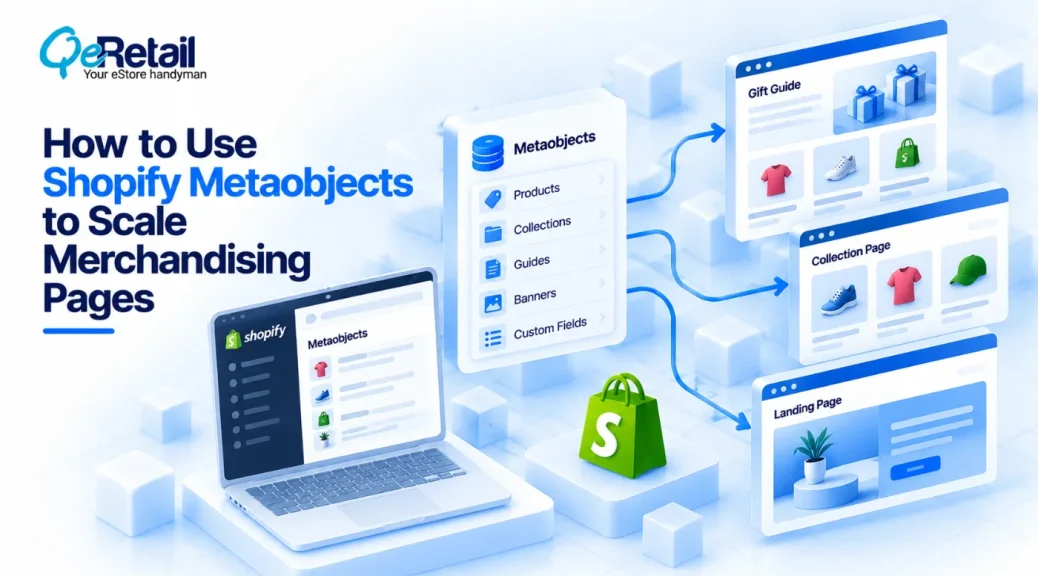
As a Shopify store grows, merchandising content often starts appearing in more places than the team originally planned.
The scale of modern merchandising is also increasing. Deloitte’s 2026 research surveyed 570 merchandising executives and professionals and found that retailers are increasingly focusing on consumer-centric experiences, flexibility, automation, and data-driven merchandising as they manage changing customer expectations.
A product story may need to appear on several collection pages. A buying guide may be relevant to multiple products. Brand information may need to appear across different sections of the storefront. Seasonal campaigns may also require the same content to be reused across multiple merchandising experiences.
Without a structured content model, teams often solve this by copying content from one page to another.
That approach may work for a small catalog. As the store expands, however, duplicated content becomes harder to maintain, update, and govern.
Shopify Metaobjects provide a way to structure reusable content as independent records that can be referenced across products, collections, pages, and other supported storefront experiences.

Key Action Points Summary:
- Identify merchandising content that appears across multiple storefront locations
- Separate reusable content from content that belongs to a single page
- Use Metaobjects to structure recurring merchandising information
- Connect Metaobjects with products, collections, and relevant storefront content
- Create consistent content fields instead of duplicating page sections
- Define ownership and update rules for reusable merchandising content
- Avoid creating Metaobjects for information that only belongs to one page
- Design content relationships before creating large numbers of Metaobject definitions
- Keep reusable content flexible enough to support future merchandising needs
- Review existing duplicated content before introducing a new content structure
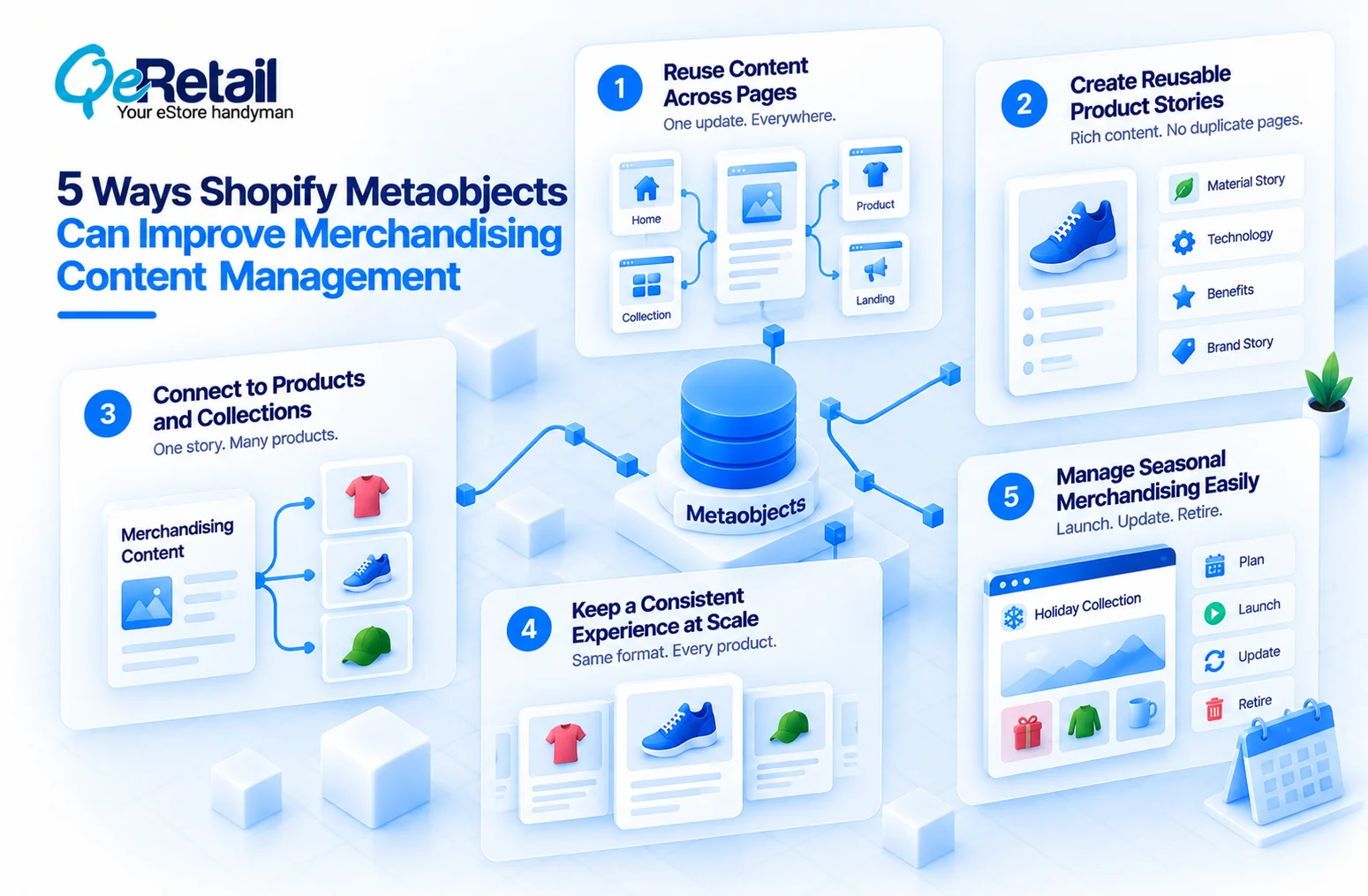
5 Ways Shopify Metaobjects Can Improve Merchandising Content Management
Metaobjects are not simply another way to store text inside Shopify.
Their value becomes more apparent when a store has content that needs to exist independently from a single product, collection, or page and be reused across different merchandising experiences.
1. Use Metaobjects When The Same Merchandising Content Appears In Multiple Places
A growing Shopify store may have the same buying guide, material explanation, product benefit, brand story, or promotional message appearing across several parts of the storefront.
Copying that information into each page creates multiple versions of the same content.
When the underlying information changes, someone must identify every location where it was copied and update each version.
What Should Shopify Stores Do To Improve?
- Identify content currently duplicated across the storefront
- Group repeated content by its business purpose
- Determine which information needs a single source of truth
- Create reusable Metaobject definitions for appropriate content types
- Connect the reusable content to relevant storefront entities
Quick Win:
Find one piece of merchandising content currently maintained in three or more places and evaluate whether it should become one reusable Metaobject.
2. Create Reusable Product Stories Without Creating Duplicate Pages
Merchants often create additional pages when a product story needs more context.
For example, a store may want to explain a material, technology, ingredient, design approach, collection concept, or product category in greater detail.
Creating a separate page for every variation can make the content structure difficult to manage.
Metaobjects allow stores to create structured records for these stories and associate them with the products where they are relevant, without requiring a separate page for every relationship.
What Should Shopify Stores Do To Improve?
- Identify product information that extends beyond standard Shopify fields
- Separate reusable product stories from individual product descriptions
- Create structured fields for the information customers actually need
- Associate the relevant content with multiple products
- Review how the content should appear within the product experience
Quick Win:
Choose one product attribute that is currently repeated manually across product descriptions and convert it into a reusable structured content concept.
3. Connect Merchandising Content To Products And Collections
One product can belong to several merchandising themes, while one merchandising story can apply to many products.
For example, a skincare store may have products associated with a skin concern, ingredient story, routine, or product benefit. A fashion store may organize products around materials, occasions, collections, or style concepts.
Metaobjects can help represent these relationships as structured content instead of forcing merchants to repeat the same information across individual pages.
What Should Shopify Stores Do To Improve?
- Map the relationships between products and merchandising concepts
- Identify content that applies to groups of products
- Create structured Metaobjects for recurring merchandising categories
- Connect products or collections to the appropriate records
- Design storefront components around those relationships
Quick Win:
Take one collection with multiple merchandising themes and map which content applies to every product, selected products, or the collection as a whole.
4. Build Consistent Merchandising Experiences Across A Large Catalog
Different teams may create product content at different times, resulting in variations in terminology, formatting, descriptions, and supporting information.
This becomes particularly difficult when the same merchandising concept needs to appear across hundreds of products.
A structured Metaobject can establish consistent fields and content relationships while allowing the storefront to present that information in different contexts.
What Should Shopify Stores Do To Improve?
- Identify merchandising information that needs consistent presentation
- Define standard fields for each reusable content type
- Establish content ownership before creating the structure
- Use controlled fields where consistency matters
- Review existing catalog content before migrating it into Metaobjects
Quick Win:
Select one high-volume content type and define the exact fields every version should contain before creating the Metaobject definition.
5. Manage Seasonal Merchandising Without Rebuilding Store Pages
A store may need to promote a holiday collection, gifting theme, summer edit, back-to-school range, or limited-time campaign across several parts of the storefront.
If every campaign requires manually editing multiple pages, merchandising teams spend time rebuilding content rather than managing the campaign itself.
Reusable structured content can provide a more controlled way to manage campaign-related information and connect it with the storefront experiences where it belongs.
What Should Shopify Stores Do To Improve?
- Identify recurring seasonal content requirements
- Separate campaign information from permanent storefront content
- Define reusable fields for campaign-related merchandising
- Connect campaign content with the relevant products or collections
- Establish when seasonal content should be activated or retired
Quick Win:
Review the last seasonal campaign and list every location where the same campaign information had to be manually added or changed.
How QeRetail Helps Build Structured Shopify Merchandising Experiences
Effective Metaobject implementation starts with understanding how merchandising information is created, maintained, related, and displayed.
QeRetail helps Shopify businesses turn scattered content requirements into structured storefront experiences that are easier to manage and extend.
1. Shopify Metaobject Architecture
Our team designs Metaobject structures around the store’s actual merchandising requirements, defining appropriate fields, relationships, references, and content types without adding unnecessary complexity.
2. Reusable Merchandising Content
We identify content that appears across products, collections, pages, and other storefront locations and structure it so merchants can maintain one reusable source instead of managing multiple copies.
3. Shopify Theme Integration
Our experts connect Metaobjects with Shopify theme components so structured content can appear in the right storefront locations while maintaining the store’s existing design and customer experience.
4. Product and Collection Content Relationships
We build relationships between structured merchandising content and Shopify products or collections, allowing stores to create richer experiences without manually reproducing the same information.
5. Custom Merchandising Experiences
When standard theme sections are not enough, our team can develop custom storefront components that use Metaobject data to create merchandising experiences around the store’s specific content model.
6. Content Migration and Consolidation
Existing duplicated content can be reviewed, reorganized, and migrated into a more structured model so merchants can move away from fragmented page-by-page content management.

Conclusion
Shopify Metaobjects become valuable when merchandising content needs to exist beyond a single page. They can help stores create reusable relationships between products, collections, campaigns, and business-specific content without forcing teams to maintain multiple copies of the same information.
For growing Shopify stores, that shift can make merchandising easier to maintain while giving teams more flexibility to create richer storefront experiences.
QeRetail helps Shopify businesses structure, connect, and implement reusable merchandising content using Shopify’s available content and theme capabilities.
Contact us to build a structured Shopify merchandising experience that makes reusable content easier to manage, connect, and scale.
Frequently Asked Questions
What Are Shopify Metaobjects?
How Are Metaobjects Different From Shopify Products Or Pages?
Can Shopify Metaobjects Be Used Across Multiple Products?
Do Shopify Metaobjects Replace Shopify Pages?
When Should A Shopify Store Consider Using Metaobjects?
Table of Contents