Your eCommerce store may offer high-quality products, competitive pricing, and a seamless checkout experience, yet customers can still hesitate before making a purchase.
For many growing online businesses, the problem is not product quality or website functionality. It is the small content errors that quietly appear across product pages, navigation, promotional banners, checkout messages, and customer communications over time.
These mistakes rarely prevent customers from completing a purchase immediately. Instead, they create subtle moments of doubt that influence how trustworthy and professional your business appears.
A spelling mistake in a product description, inconsistent messaging across pages, or unclear checkout instructions may seem insignificant individually, but together they can affect purchasing decisions.
A report by Nielsen Norman Group says that users usually spend only a few seconds scanning webpage content before deciding whether to continue engaging. So, there is a very small window for store owners to make users perceive their store to be credible and trustworthy.
As your store grows and more products, campaigns, and content are added, maintaining consistent communication becomes just as important as maintaining website performance.

Key Action Points Summary
Before reviewing your storefront content, focus on these areas:
- Audit customer-facing content regularly
- Fix spelling and grammar mistakes
- Standardize product terminology
- Maintain consistent brand messaging
- Review checkout instructions
- Verify promotional content
- Test content on mobile devices
- Review automated customer emails
- Update outdated product information
- Schedule periodic content reviews
Quick Wins: Review Your Store Content Before Launching New Campaigns
Before investing in new marketing initiatives, start with these simple checks.
1. Review Your Best-Selling Product Pages
Focus on the pages that generate the highest revenue.
Correct spelling mistakes, improve readability, and ensure product information remains accurate and consistent.
2. Complete a Test Purchase
Read every message customers encounter during checkout.
Look for confusing wording, inconsistent terminology, or outdated promotional information.
3. Review Your Store on Mobile Devices
Content that looks well structured on desktop may appear difficult to read on smaller screens.
Check headings, product descriptions, buttons, and notification messages from a customer’s perspective.
Why Small Content Errors Can Quietly Reduce Store Conversions?
Most merchants associate conversion optimization with website speed, checkout improvements, pricing strategies, and marketing campaigns.
While these areas are important, customers also evaluate the quality of every interaction they have with your store. The words they read often influence how professional, reliable, and trustworthy your business appears.
Research published by Stanford Persuasive Technology Lab found that nearly 46% of consumers evaluate a company’s credibility based on the design and presentation of its website, including the quality and professionalism of written content.
As stores continue expanding their product catalogs, promotional campaigns, and customer communication channels, maintaining consistent content becomes increasingly challenging.
During our storefront content reviews, we frequently observe that content quality receives far less attention than design, performance, or checkout optimization. In many cases, product pages, promotional banners, policy pages, and checkout messages have been updated independently over time, creating inconsistencies that gradually affect the customer experience.
3 Hidden Content Issues That Quietly Affect Store Conversions
Most content-related conversion problems are not caused by obvious writing mistakes. They often develop through small inconsistencies that reduce customer confidence without affecting website functionality.
These issues become more noticeable as stores publish more products, promotions, and customer communications. While individually they may appear insignificant, together they can influence purchasing decisions and overall customer experience.
1. Inconsistent Product Messaging Creates Purchase Hesitation
Customers expect product information to remain consistent throughout their buying journey.
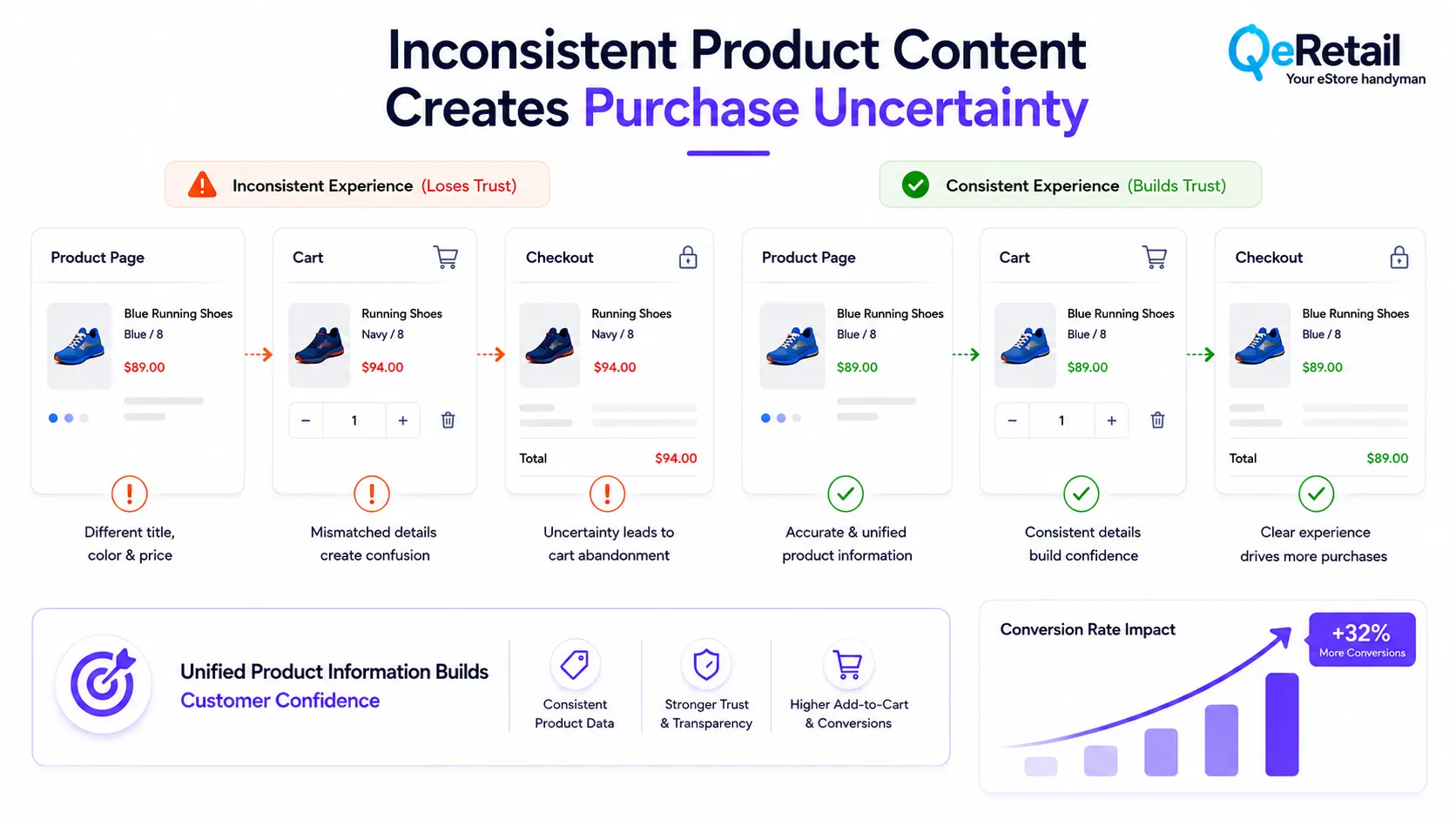
When product pages, collection pages, promotional banners, comparison tables, and checkout summaries describe the same product differently, customers may begin questioning the accuracy of the information they are reading.
These inconsistencies often appear after product updates, seasonal campaigns, or when multiple team members contribute content over time. While none of the information may be technically incorrect, conflicting descriptions introduce unnecessary uncertainty before purchase.
What Should Businesses Do To Improve?
- Standardize product terminology
- Maintain consistent feature descriptions
- Review promotional messaging regularly
- Update product information across all customer touchpoints
Quick Wins:
Compare your product page, collection page, and checkout summary for one best-selling product. Every customer-facing description should communicate the same information consistently.
2. Check Out Messages That Create Unnecessary Uncertainty
Customers expect checkout instructions to be clear, accurate, and easy to understand.
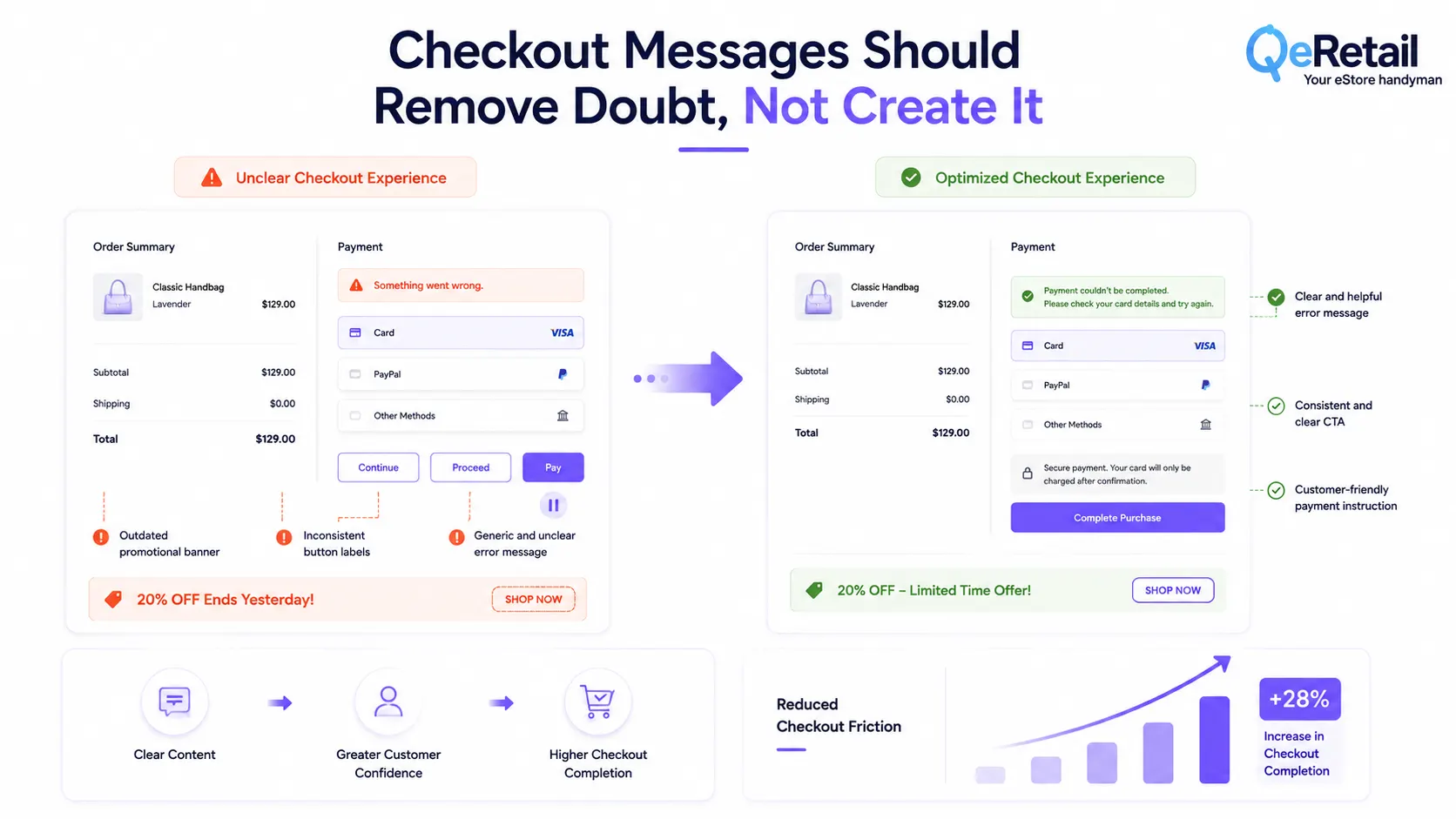
Generic error messages, inconsistent button labels, unclear payment instructions, or outdated promotional text can interrupt the purchase journey even when the checkout functions correctly. Instead of helping customers complete their purchase, unclear messaging encourages hesitation at the most important stage of the buying process.
These issues commonly appear after payment integrations, promotional campaigns, or checkout customizations where customer-facing content is updated without reviewing the complete checkout experience.
What Should Businesses Do To Improve?
- Review all checkout messages regularly
- Replace technical language with customer-friendly instructions
- Maintain consistent button labels
- Update promotional messaging after every campaign
Quick Wins:
Complete a purchase using different payment methods and carefully read every message displayed during checkout. Small wording improvements often create a smoother customer experience.
3. Trust Signals Lose Their Impact When Content Contains Errors
Trust signals are designed to reassure customers before they complete a purchase. Security badges, customer reviews, return policies, shipping information, and guarantee statements all help customers feel more confident about buying from your store.
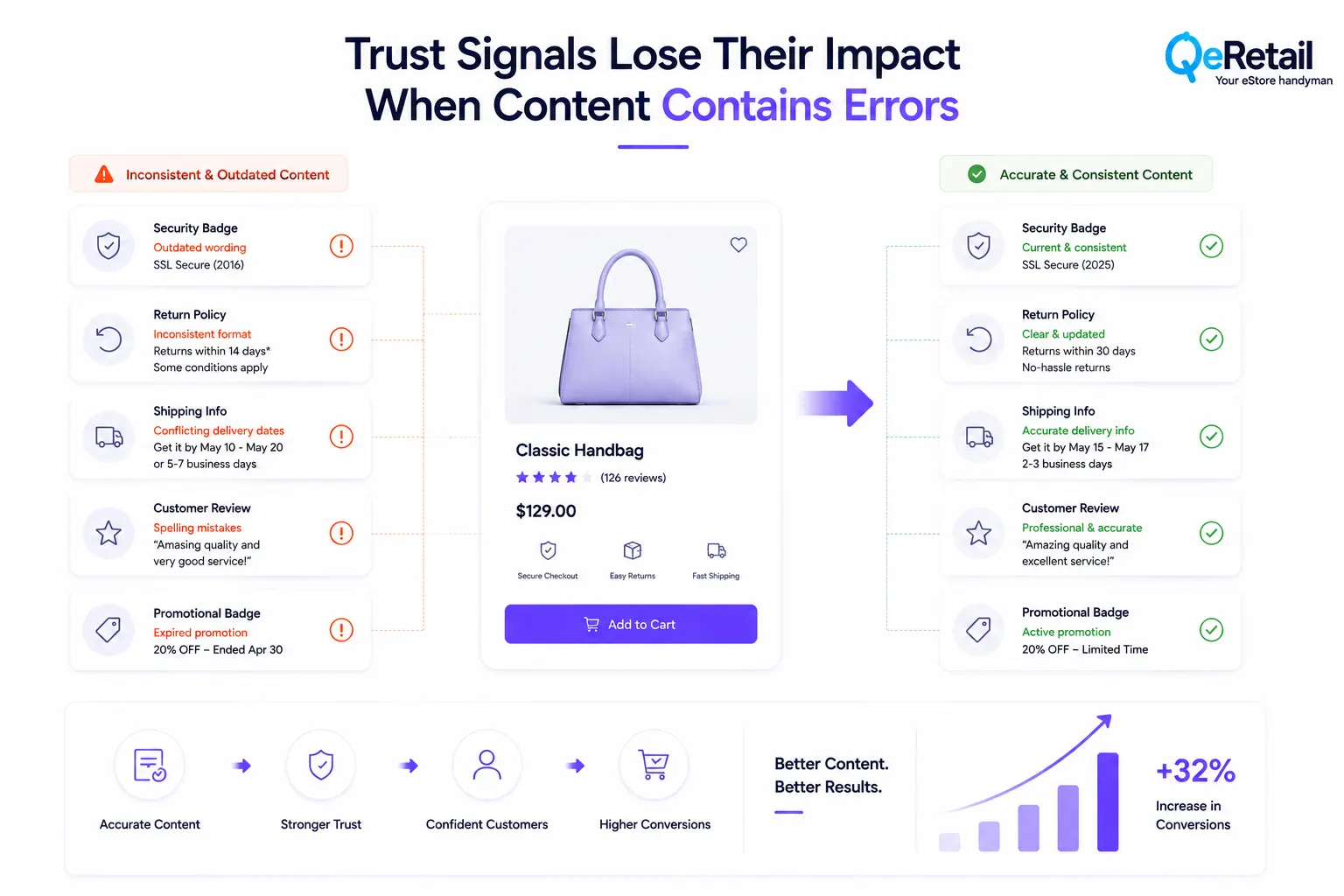
Their effectiveness begins to decline when these sections contain spelling mistakes, inconsistent formatting, outdated information, or conflicting messaging. Customers may not consciously notice every error, but they often associate poor content quality with poor business reliability.
As stores continue updating products, policies, and promotional campaigns, these customer-facing pages are frequently overlooked. Over time, small content issues can weaken the credibility that trust signals are intended to build.
What Should Businesses Do To Improve?
- Review policy pages regularly
- Keep trust-related messaging consistent
- Remove outdated promotional content
- Maintain a professional writing standard across the storefront
Quick Wins:
Review your shipping, return, and warranty pages from a first-time customer’s perspective. If any information appears outdated, inconsistent, or difficult to understand, update it before launching your next campaign.
How QeRetail Helps Businesses Improve Storefront Content Quality?
Storefront content should do more than describe products. It should guide customers confidently through every stage of the buying journey while maintaining consistency across the entire shopping experience.
QeRetail helps eCommerce businesses identify content-related issues that quietly affect customer trust, user experience, and conversion performance.
Storefront Content Audit
We review customer-facing content across product pages, category pages, navigation, promotional banners, and checkout to identify inconsistencies and improvement opportunities.
Checkout Content Optimization
Our team evaluates checkout instructions, validation messages, payment information, and customer notifications to create a more consistent purchasing experience.
Content Consistency Review
We assess how product information, promotional messaging, policies, and customer communications align across different touchpoints to reduce confusion and strengthen brand credibility.
Continuous Content Quality Improvement
As your store grows, we help establish review processes that maintain content accuracy, consistency, and readability across your storefront.
Our team has reviewed storefront content across businesses operating in multiple industries, and one recurring pattern remains consistent. Stores that maintain structured content governance tend to deliver a more reliable customer experience than those where content evolves without periodic reviews.

Conclusion
Customers rarely abandon a purchase because of a single spelling mistake or an inconsistent message. Instead, they form an overall impression based on every interaction they have with your store. Clear, accurate, and consistent content helps reinforce credibility, reduces unnecessary hesitation, and creates a more reliable shopping experience.
QeRetail helps eCommerce businesses improve storefront quality through content audits, user experience reviews, and practical optimization strategies that support long-term business growth. Our team focuses on identifying overlooked issues that quietly influence customer decisions and conversion performance.
Contact us to build a storefront experience that inspires confidence from the first click to the final purchase.
Frequently Asked Questions
How Can Typographical Errors Affect eCommerce Conversions?
Which Store Pages Should Be Reviewed Most Frequently?
How Often Should eCommerce Businesses Audit Their Store Content?
Can Content Quality Influence Customer Trust?
Why Is Content Consistency Important Across the Store?
Table of Contents