
Holiday buying now starts early. Deloitte’s 2026 survey found 28% of shoppers’ holiday budgets are likely to run out by the end of October, the highest share in six years.
Your return window probably ignores that. A gift delivered on November 1 under a 30-day rule expires on December 1, weeks before anyone unwraps it.
A holiday returns policy isn’t goodwill. It’s a margin decision that breaks when you stretch the window without deciding who gets paid, how, and minus which fees.
This guide shows you how to extend windows, handle gifts, and use credit without losing profit.
Key Action Points:
- Set a longer window before holiday orders arrive
- Check product overrides, market policies, and final sale items
- Send gift balances to the recipient, not the buyer
- Offer exchanges first and store credit second
- Deduct return fees on every refund screen
- Inspect and restock returns the day they land

How Should You Set a Longer Holiday Return Window?
A longer window takes minutes to set. But here is the catch: Shopify counts days from delivery and applies changes only to future orders.
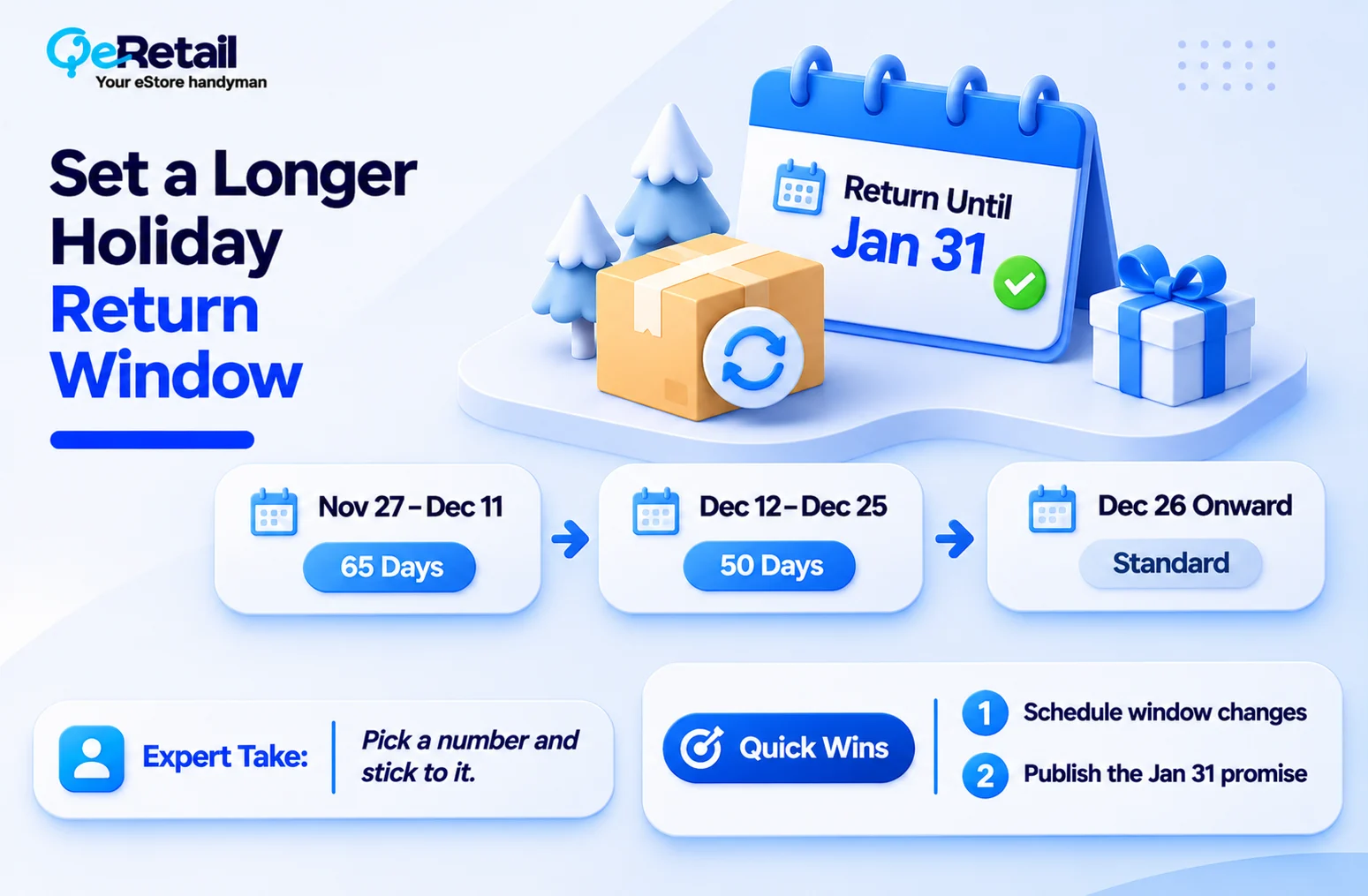
Work Backward From January 31
Your return rules, under Settings and then Policies, count in days, not end dates. For a January 31 cutoff, choose a custom window and step it down,
- November 27 to December 11: Set 65 days.
- December 12 to December 25: Set 50 days.
- December 26 onward: Restore your standard window.
Orders from the first two periods stay returnable through at least January 31, however fast they ship. Orders placed before your first switch keep the old rule. Also turn on the weekend and holiday extension, which moves an expiring window to the next business day.
Expert Take:
Switching return rules off is not generosity. Shopify says customers can return items bought while rules were off with no time limit, and turning rules back on won’t fix those orders. Pick a number.
Quick Wins:
- Schedule each window change now so no switch slips
- Publish the January 31 promise on a policy page to cut repeat support tickets
Check Overrides, Markets and Final Sale Items
Overrides give a collection, product, or variant its own window, and the shortest one wins when several apply. So last spring’s 14-day electronics override still beats your 65-day rule.
A market policy also replaces your default for customers there. (If you only edited the default, those shoppers never got the extension.) Final sale items stay non-returnable, and manual policy text needs your own update.
Expert Take:
A blanket extension is not smart service when it covers stock you can’t resell. Décor returned in late January has missed its season. Give it a shorter override, and say so on the product page.
Quick Wins:
- Audit overrides and market policies to catch windows that break your promise
- Place a test order in each market to confirm the window shoppers receive
How Do You Handle Gift Returns Without Paying the Wrong Person?
A gift return involves two people and one order. A standard refund pays the buyer, spoils the surprise, and leaves the recipient with nothing.
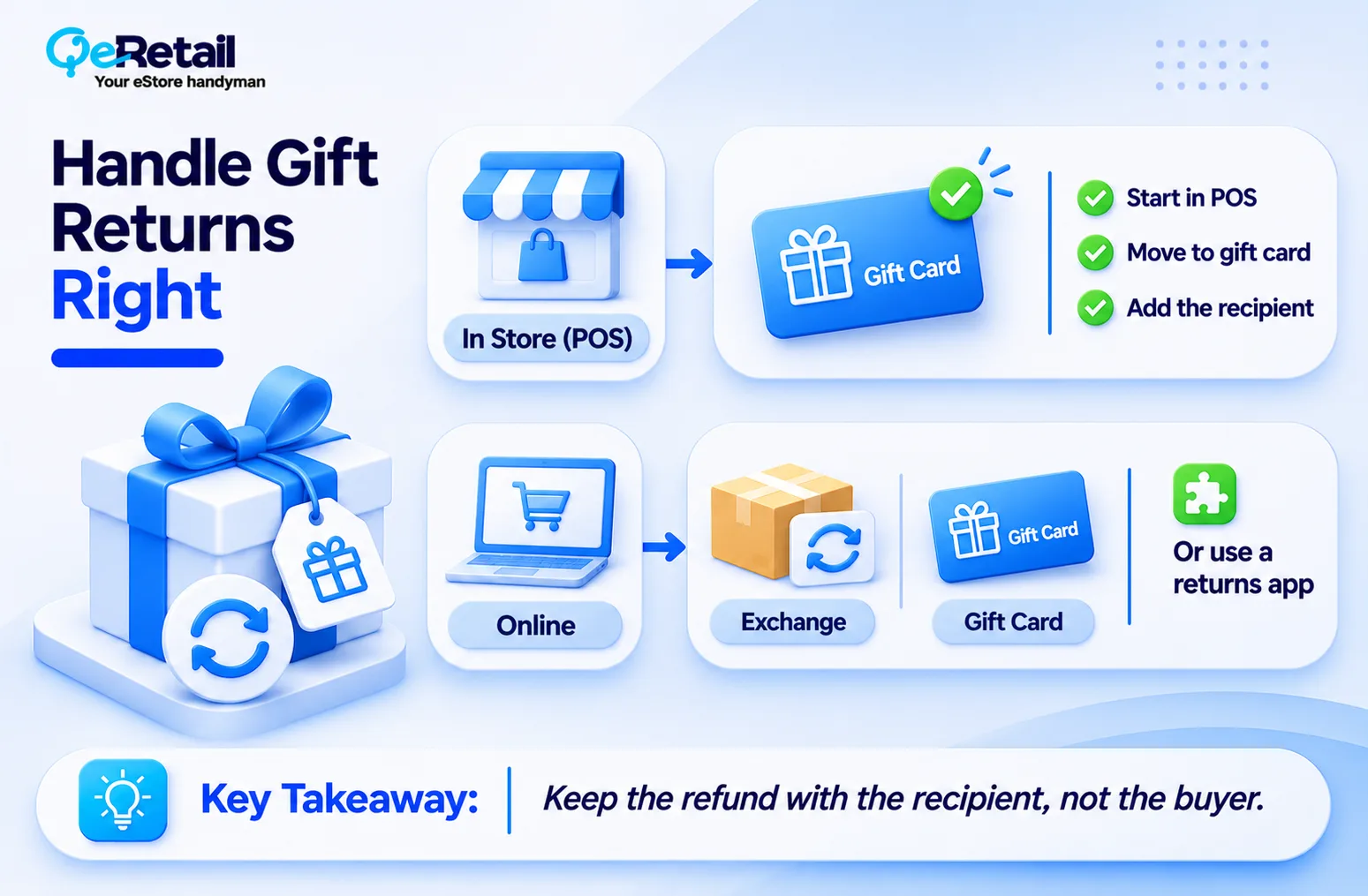
In Store: Move the Balance to a Gift Card
A Shopify POS gift receipt proves the purchase without showing the amount spent. Your recipient can return the item without learning the price. To pay them,
- Start in POS: You can’t refund to a gift card from POS if the return began in your admin.
- Switch the destination: Open the return and turn on Return balance to gift card.
- Swap the customer: Remove the buyer’s profile, add the recipient, then refund. The original order stays with the buyer.
Test this with staff email addresses first, so you know who receives which message.
Online: Choose the Route Before December
Online is harder. Self-serve returns run through the buyer’s customer account and can’t take exchange requests. So ask the recipient for an order number, keep prices out of replies, and pick a route now,
- Manual exchange: Create the return yourself, add the replacement item, and confirm the shipping address before release.
- Gift card: Issue the value to the recipient and note it on the original order, so nobody refunds the buyer too.
- Returns app: Pick one with a gift return flow when volume makes manual handling too slow.
If your agent has to improvise, your margin pays for it.
How Can Store Credit Protect Margin on Holiday Returns?
Store credit keeps cash in your business. But credit is money you still owe, and it pays off only when the next order carries margin.
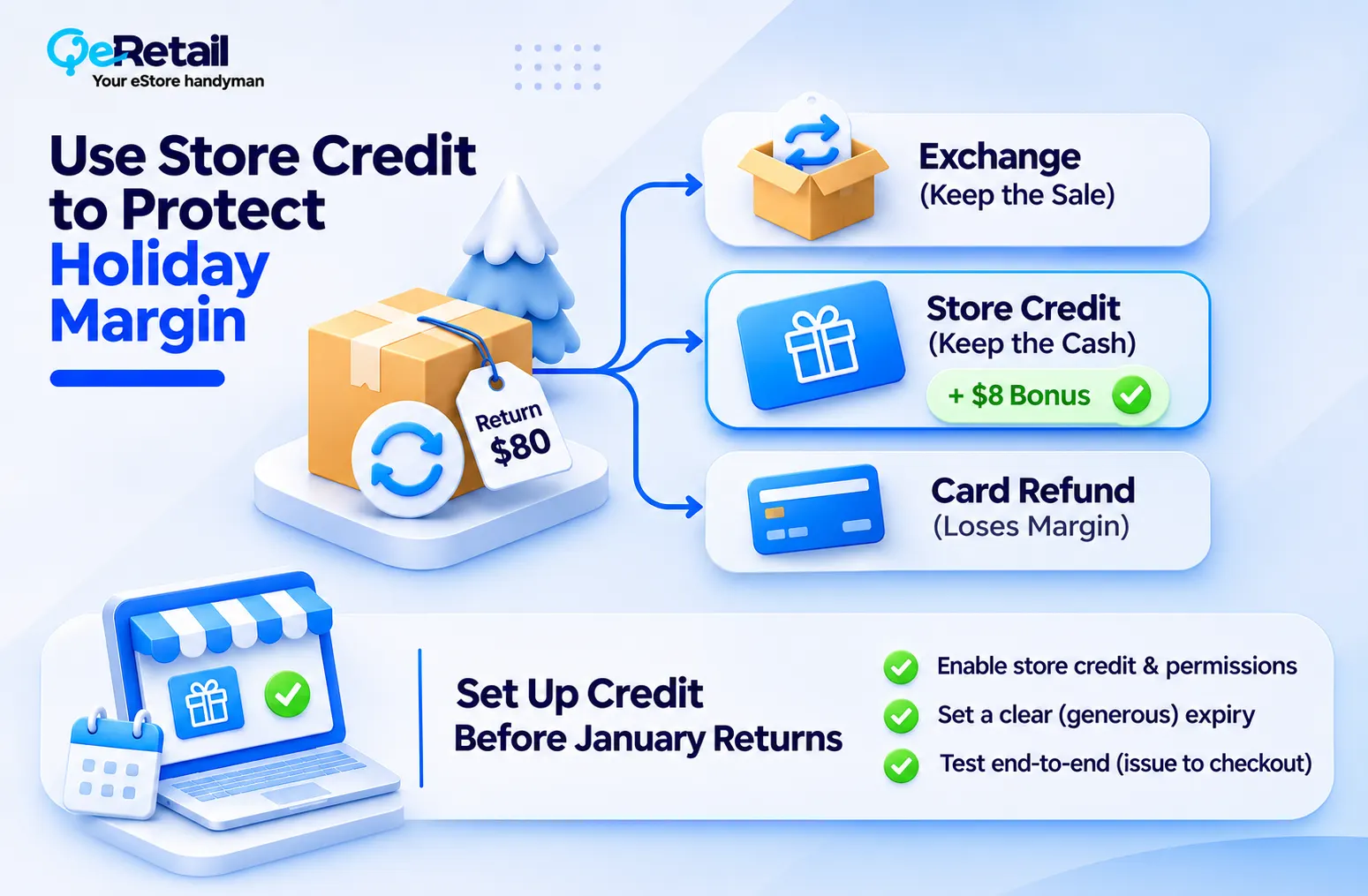
Offer the Exchange First and Credit Second
An exchange keeps the sale. Credit keeps the cash. A card refund keeps neither, yet where the law gives shoppers a refund, credit can’t replace it.
Shopify lets you refund to the original payment, store credit or both. On an $80 return, add an $8 bonus as separate credit. At a 60% gross margin, those extra goods cost about $3.20, and only if spent. (Run that math on your thinnest category.)
Expert Take:
Forced store credit is not retention. It turns a simple return into a complaint, sometimes a chargeback. Sweeten the credit and keep the refund visible. Loyalty you have to trap won’t last.
Quick Wins:
- Write a one-line credit offer so agents present it consistently
- Cap bonus credit by category to protect your thinnest-margin products
Set Up Credit Before the First January Refund
Check the plumbing now. Shoppers spend credit only after signing in through customer accounts or Shop Pay. Staff needs refund permission, and you set any expiry date each time you issue credit.
Credit also works online, in POS, and in Shop. A January return can then become a February order without another ad click, which helps you reduce Shopify customer acquisition cost.
Expert Take:
A short expiry date is not margin protection. Customers read it as a penalty, and your team inherits the arguments. Check local law first, then give a generous period and show it in your policy.
Quick Wins:
- Test one credit refund from issue to checkout before returns pile up
- Email credit holders in February to turn open balances into orders
Where Do Holiday Returns Eat Your Margin?
The window rarely does the damage alone. Leaks hide in habits nobody checks during peak week,
- Missed fees: Shopify says return shipping and restocking fees don’t come off refunds automatically. Check the amount before you confirm.
- Full-price gift cards: POS Pro unverified returns (no original order) pay gift cards at the item’s current price by default. After your sale ends, edit that figure.
- Slow restocking: McKinsey’s 2026 research found a slow, static returns process leaves retailers recovering only about 50% of a product’s worth. Inspect returns the day they land.
- One rule for everything: The same research shows 71% of consumers say a dynamic, product- and customer-specific policy wouldn’t deter them from shopping with a retailer again.
So where should you start? With the refund screen. Then show shoppers your longer window before they pay, and use our Shopify checkout optimization guide to tighten that step.

Stop Extending Windows. Start Protecting Every Return.
A longer window is the easy part. Your risk sits in what happens after the box comes back. If you added 35 days and left fees, gift payouts, and credit rules to chance, you didn’t build a holiday returns policy; you just postponed your refunds until January.
The better path settles it in advance. Dated windows answer questions before they reach support. Recipients get value without seeing the price, exchanges keep sales alive, and credit brings shoppers back. Those gains build each season, while improvising stores relearn the same lesson.
Need a partner who can set the rules, test the gift flow, and find the leaks before they reach your payout?
Book a free consultation, and we will review your return rules, overrides, and refund steps.
Frequently Asked Questions
How Long Should a Shopify Holiday Return Window Be?
Can I Change the Return Window for Orders Already Placed?
Does a Gift Recipient Need a Receipt to Return a Gift?
Can I Charge a Restocking Fee on Holiday Returns?
Can a Small Team Set Up a Holiday Returns Policy?
Table of Contents