Slow Shopify store growth is not the biggest blocker for your eCommerce business. It’s the invisible work happening between the systems that are supposed to be working together. What this means is that those ERPs, inventory mechanisms, and fulfillment operations that are out of sync are causing your store to lose customers.
That is not a projection. That is what happens when your Shopify store runs on CSV exports, copy-paste workflows, and a spreadsheet your ops manager built in 2022.
You are not short on tools. You are short on connections between them. Orders flow into Shopify, but inventory lives in a warehouse system your team checks manually. Payouts hit the bank, but your bookkeeper spends two days every month reconciling fees, refunds, and chargebacks by hand.
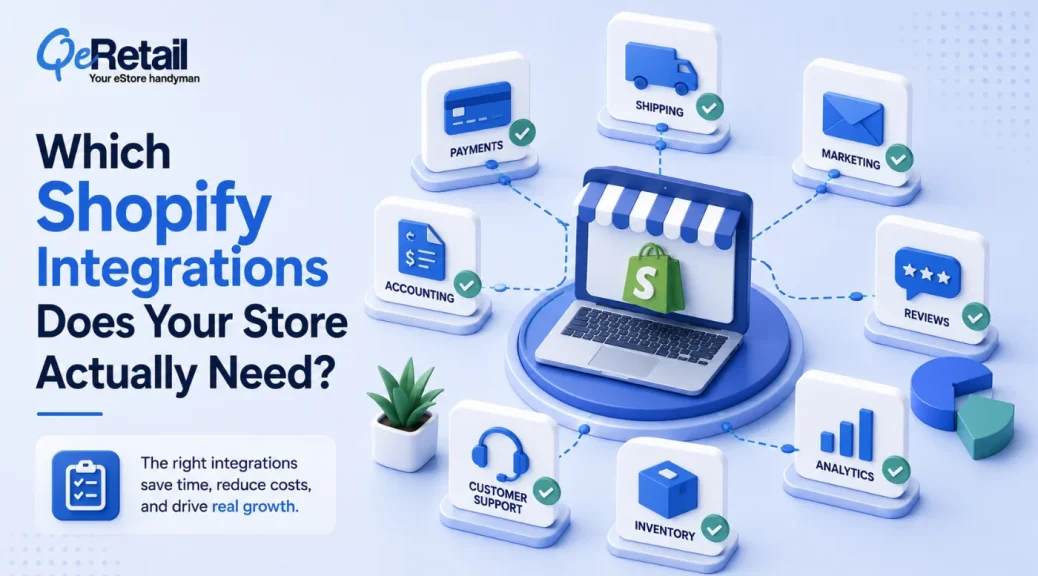
This guide compares the three integration categories every scaling Shopify store needs to evaluate: ERP, 3PL, and accounting. Not as feature lists. As decisions tied to your revenue stage, order volume, and operational pain.
This Guide Covers:
- ERP integrations that centralize orders, inventory, and finance
- 3PL integrations that outsource fulfillment without losing control
- Accounting integrations that get Shopify payouts to reconcile cleanly
- A stage-based framework for choosing the right stack
Key Action Points:
- Audit your current manual touchpoints between Shopify, fulfillment, and accounting
- Connect your accounting software to Shopify through A2X once you cross 500 orders per month
- Evaluate 3PL providers by native Shopify integration quality, not just per-order cost
- Start ERP evaluation when you manage three or more sales channels or hit $3M annual revenue
- Stop treating integrations as IT projects and start treating them as revenue architecture

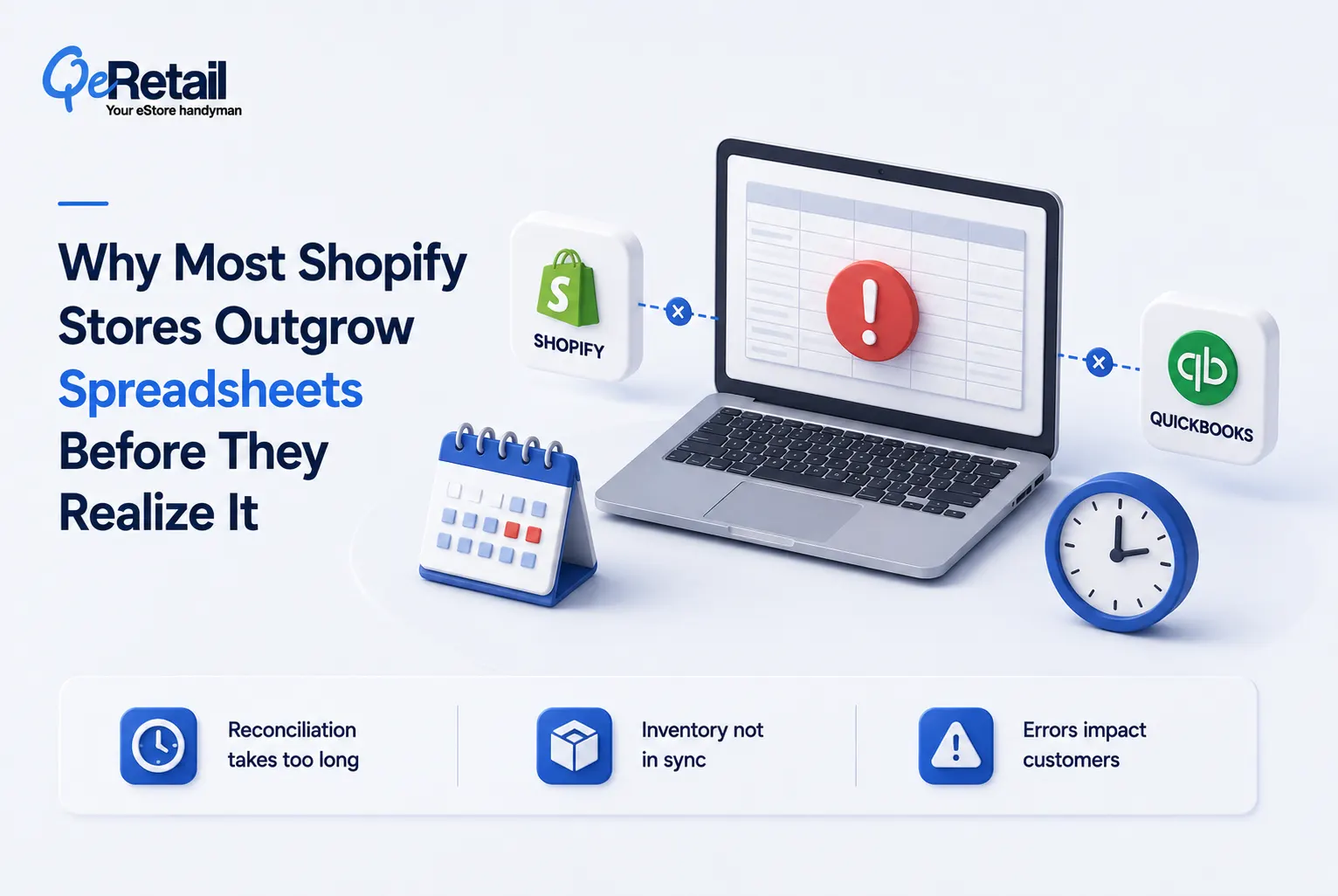
Why Most Shopify Stores Outgrow Spreadsheets Before They Realize It
Manual data entry has an error rate of 2-2784 per 10,000 orders. Wrong entries mean wrong shipments, wrong tax filings, and customers who never come back.
But here is the part most operators skip.
The problem is not the errors themselves. It is that you do not see them until month-end, when your finance team spends two days trying to figure out why Shopify payouts do not match QuickBooks.
The Signs You Have Outgrown Manual Workflows
If you’ve noticed any the signs signs below, it’s likely that you are ready to surpass manual workflows.
- Your monthly recon is more than 2 days.
- You have experienced overselling scenarios due to not having inventory in real-time.
- Your fill rate for orders starts to exceed 2%.
- Your finance team is manually entering Shopify payout info into accounting software.
If three of these sound familiar, you’re not running a growing store. You are executing a manual data entry operation and also have products to sell.
Expert Take:
Installing an inventory app that does not talk to your accounting system just creates two disconnected dashboards instead of one. Real integration means data flows without a human copying it.
Quick Wins:
- Map every manual touchpoint between Shopify, your warehouse, and your books.
- Count the hours your team spends on reconciliation each month
- Track your fulfillment error rate for 30 days before evaluating any tool
ERP Integrations: Centralizing Orders, Inventory, and Finance
ERP is not an enterprise-only decision anymore. It is the layer that connects your orders, inventory, purchasing, and financials into one system. Without it, every department works from a different version of the truth.
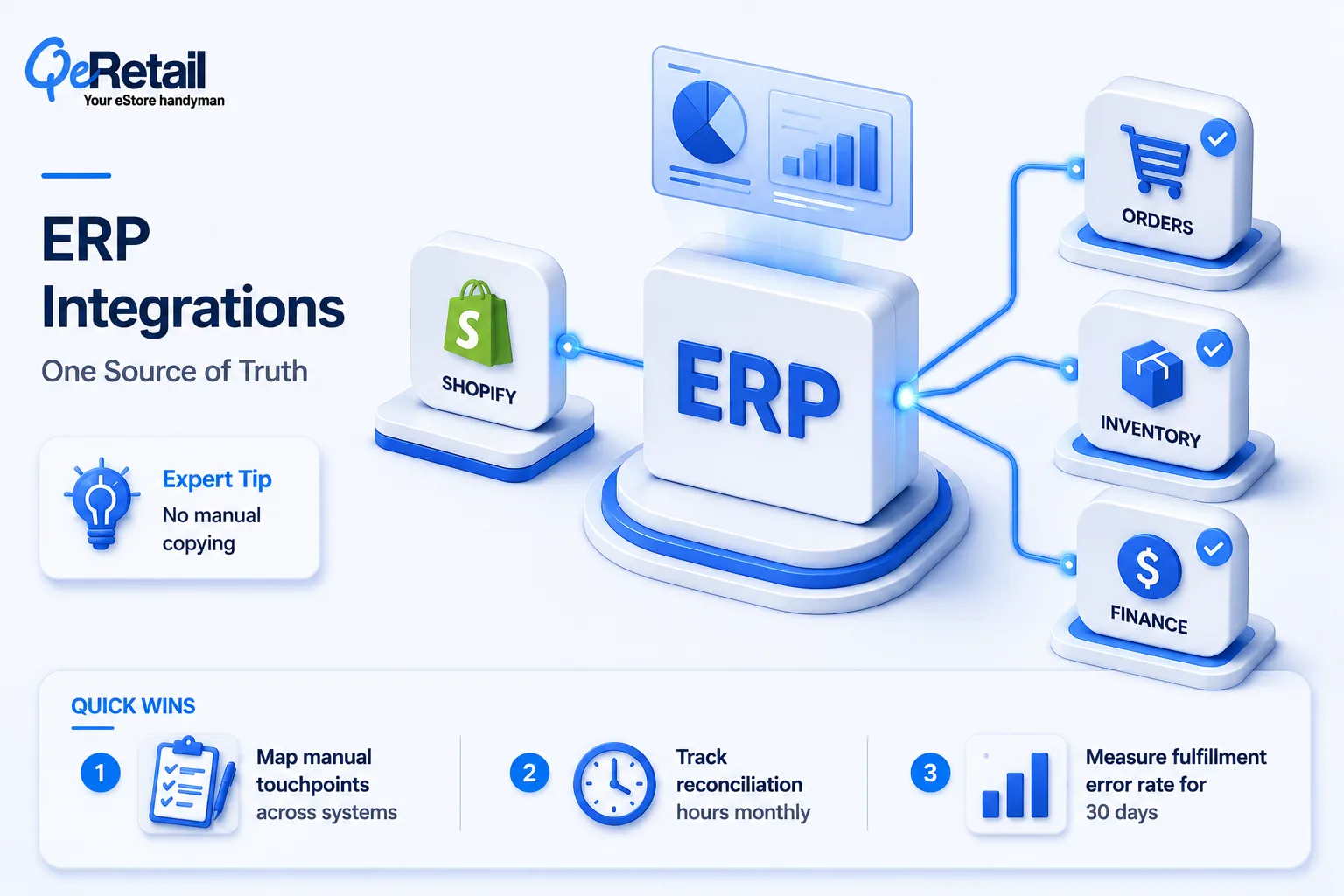
Companies using integrated ERP systems report a 20-30% reduction in operational costs within the first two years. Inventory accuracy improves by an average of 25% when eCommerce platforms connect to ERP in real time.
Expert Take:
If you install an inventory app that isn’t connected with your accounting system, you’ve got two disconnected dashboards rather than one. Real integration will be without human copying of data.
Quick Wins:
- Identify, track, and record all hand-to-hand interactions with Shopify, your warehouse, and your books.
- Track the hours that your team dedicate to reconciliation monthly
- Before using a tool, monitor your fulfillment success rate for 30 days and observe what happens to your error rate.
3PL Integrations: Outsourcing Fulfillment Without Losing Visibility
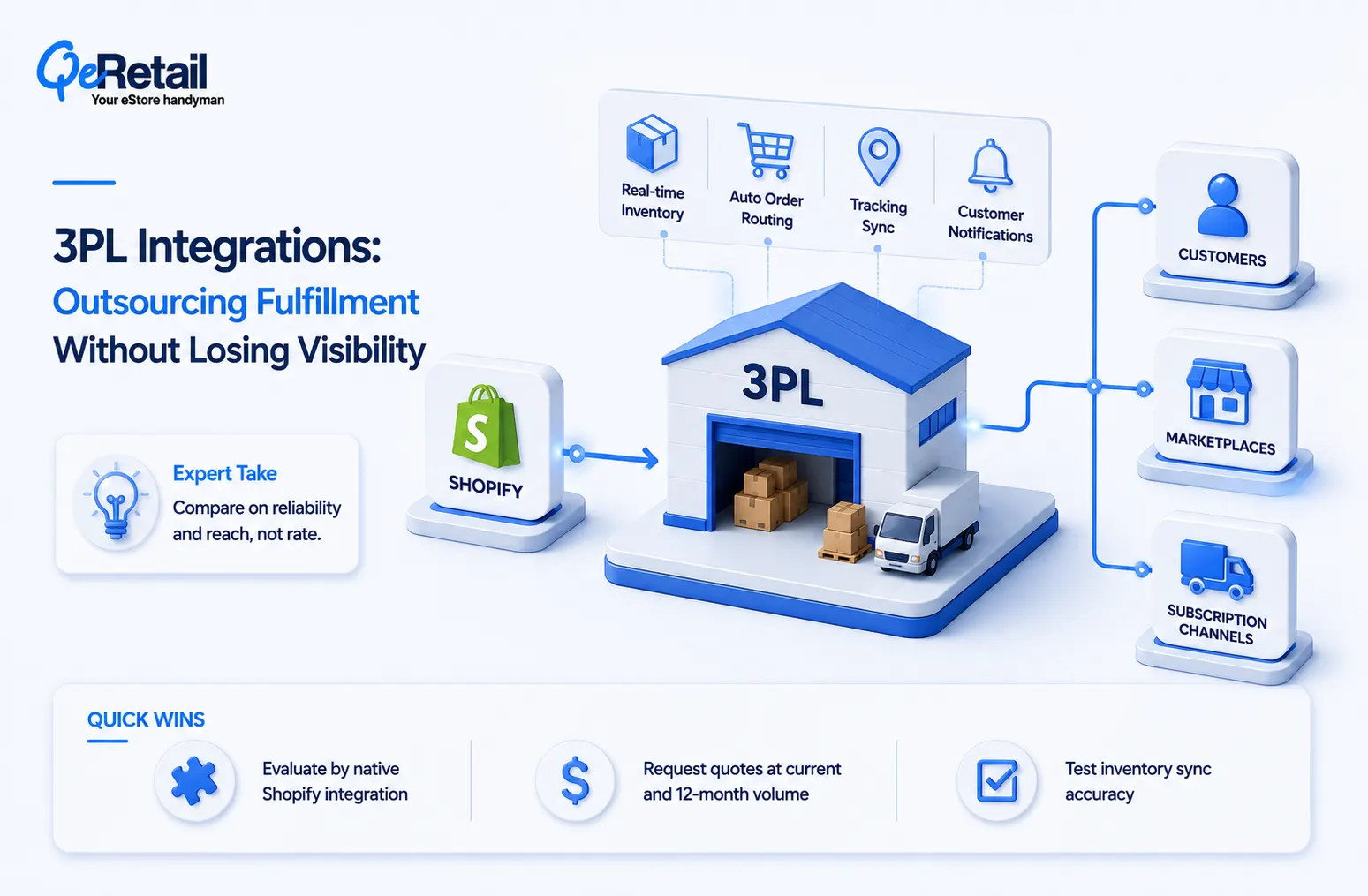
ShipBob built its value proposition on one premise: store owners should never choose between outsourcing fulfillment and maintaining real-time inventory visibility. Fulfillment collapses first under volume. The question is whether your 3PL talks to Shopify well enough that you retain visibility once the warehouse is no longer yours.
What to Look For in a Shopify 3PL Integration
A native Shopify app or direct API connection should be the baseline. Real-time inventory sync ensures your storefront reflects actual stock. Automatic order routing should trigger at checkout. Tracking should push back into Shopify so customers get notifications without your team intervening.
Red Stag Fulfillment designed its Shopify connector around this principle, pushing fulfillment status and inventory adjustments back in real time.
Expert Take:
ShipCalm offers same-day fulfillment from LA and Indianapolis with native Shopify sync. Compare on reliability and reach, not per-order rate.
Quick Wins:
- Evaluate 3PL providers by native Shopify integration, not only pricing
- Request cost quotes at current and projected twelve-month volume
- Test inventory sync accuracy before signing a contract
Accounting Integrations: Getting Shopify Payouts to Reconcile Cleanly
Shopify’s native financial reports are dashboard summaries, not accounting. The moment you need to file taxes or explain revenue to an investor, you need QuickBooks or Xero connected properly.
QuickBooks Online vs Xero for Shopify
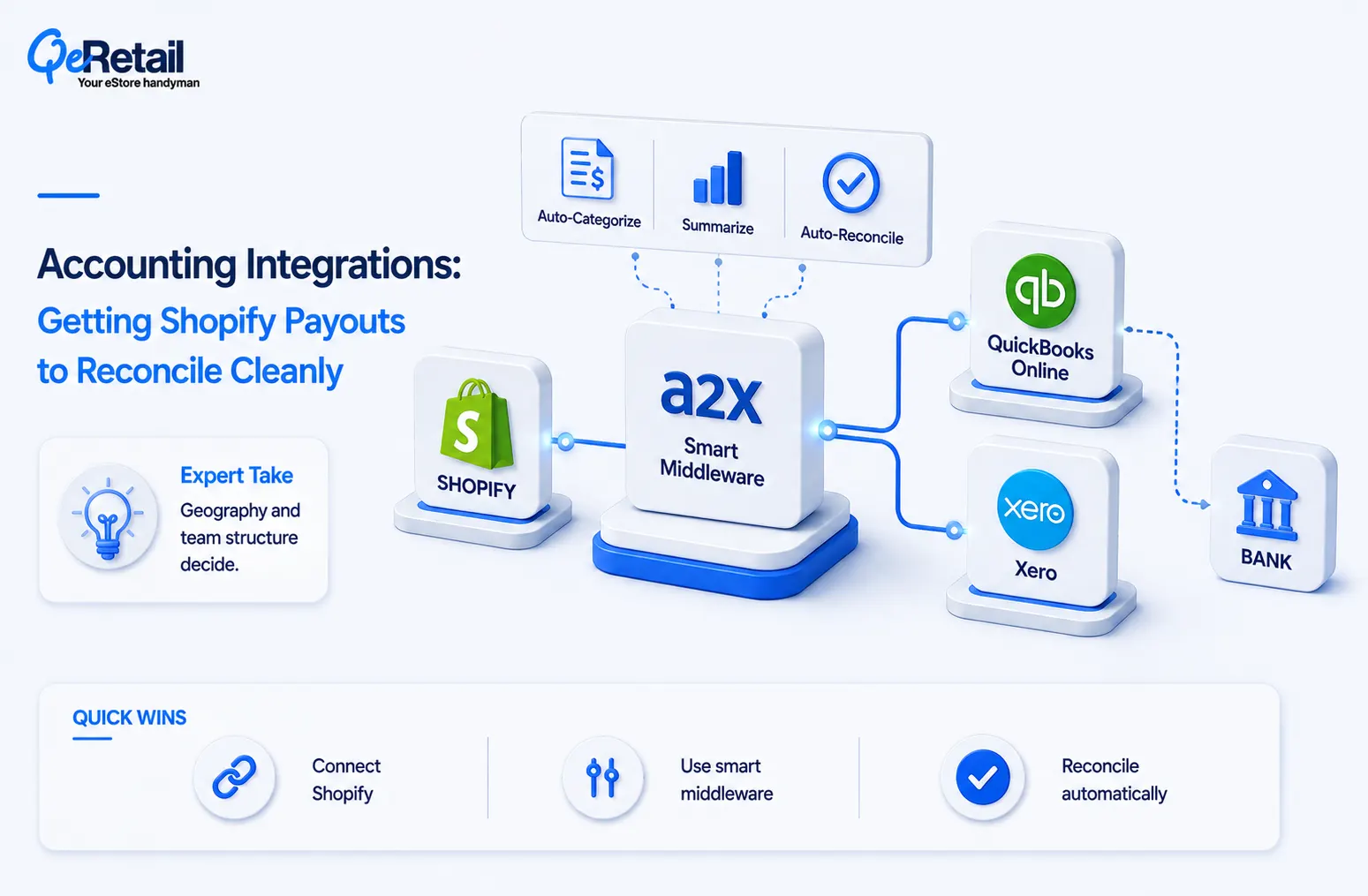
QuickBooks Online suits North American merchants selling across multiple marketplaces, with deeper reporting and a larger app ecosystem. Xero fits international sellers needing native VAT, GST, and multi-currency support with unlimited users. Geography and team structure decide.
The A2X Middleware Layer
Direct connectors often sync transaction-level data that clutters your chart of accounts. A2X auto-categorizes every transaction type and posts summaries as invoices that trigger auto-reconciliation. Payout amounts match the bank feed precisely.
How to Choose the Right Integration Stack for Your Stage
Starter Stage: Accounting First
QuickBooks or Xero with A2X. First integration every store needs. Eliminates the reconciliation problem that wastes more time than any other manual workflow.
Growth Stage: Add 3PL
When in-house packing consumes a meaningful portion of the workday or fulfillment errors become a pattern, a 3PL becomes the priority.
Scale Stage: Layer in ERP
ERP becomes justified at three or more sales channels, multiple warehouses, or when unified financial reporting spans all operations.

Stop Stitching Systems Together. Start Running Them as One.
Most Shopify stores in the growth phase operate on improvised connections. A fulfillment app that does not talk to accounting. An inventory count in a spreadsheet updated twice a week. If your team still spends hours on data entry after connecting tools, you did not integrate. You added more browser tabs.
But integration changes everything. Accounting feeds clean data into planning. 3PL feeds tracking into experience. ERP feeds inventory truth into every channel. But what to integrate? Book a free consultation, and we will map your gaps to the right stack.
Frequently Asked Questions
What Is The Best ERP For A Shopify Store Below Enterprise Scale?
How Should A Shopify Store Evaluate 3pl Pricing?
Is Xero Or QuickBooks Better For Shopify Accounting?
When Should A Shopify Store Move From Spreadsheets To An ERP?
What Does A2x Do That Native Connectors Do Not?
Table of Contents