Every $1 lost to fraud costs US eCommerce merchants $4.61. Four and a half times the disputed amount, once the fee, the goods you never see again, and the support hours all land.
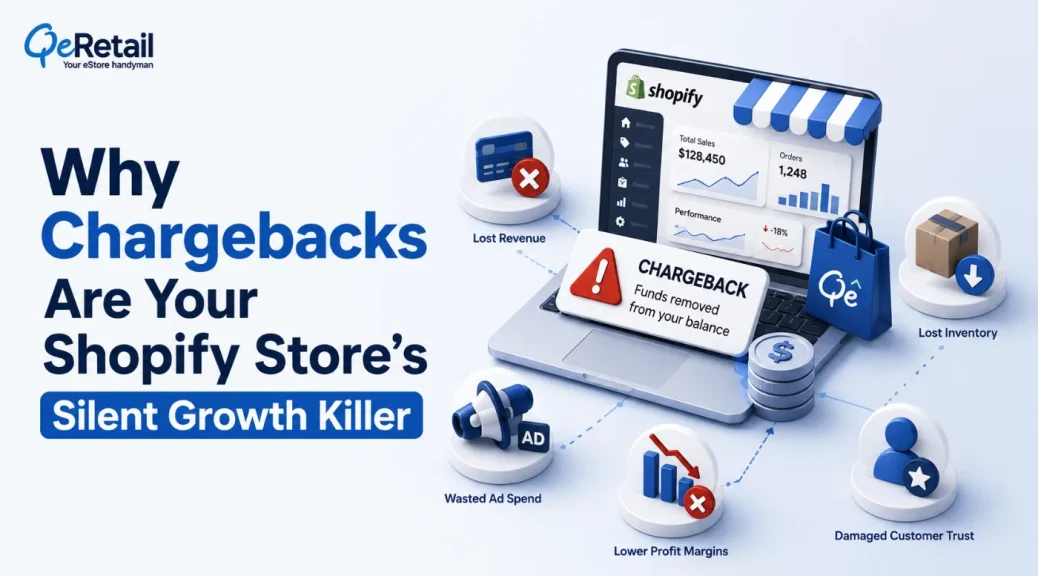
The difference between $1 and $4.61 comprises of non-refundable chargeback fees, lost merchandise (COGS), sunk shipping costs, wasted customer acquisition spend (CAC), and operational labor spent in resolving disputes.
A chargeback behaves less like a cost line and more like a tax rate that climbs with your volume. Ratios creep, monitoring programs notice, your processor mentions reserves, and you respond by tightening filters that block real customers. By the time it hurts, the damage sits in your approval rate, not your dispute log.
This article focuses on what is chargeback tax on a Shopify store, why most of the Shopify store owners miss it and how to build a defense stack against it.
Key Action Points:
- Track fraud ratio and dispute ratio as two separate numbers
- Turn on 3-D Secure for high-risk segments only
- Ship within 7 days, tracking on every physical order
- Fix your billing descriptor before buying a fraud tool
- Audit false declines monthly, next to chargeback losses

What is the Chargeback Tax on a Shopify Store?
Chargeback tax is a systematic but multidimensional burden which payment frauds can cause for high-growth Shopify stores. It’s not a single line-item but a cumulative weight composed of direct financial losses, operational drag, platform-enforced capital lockups, and revenue suppression.
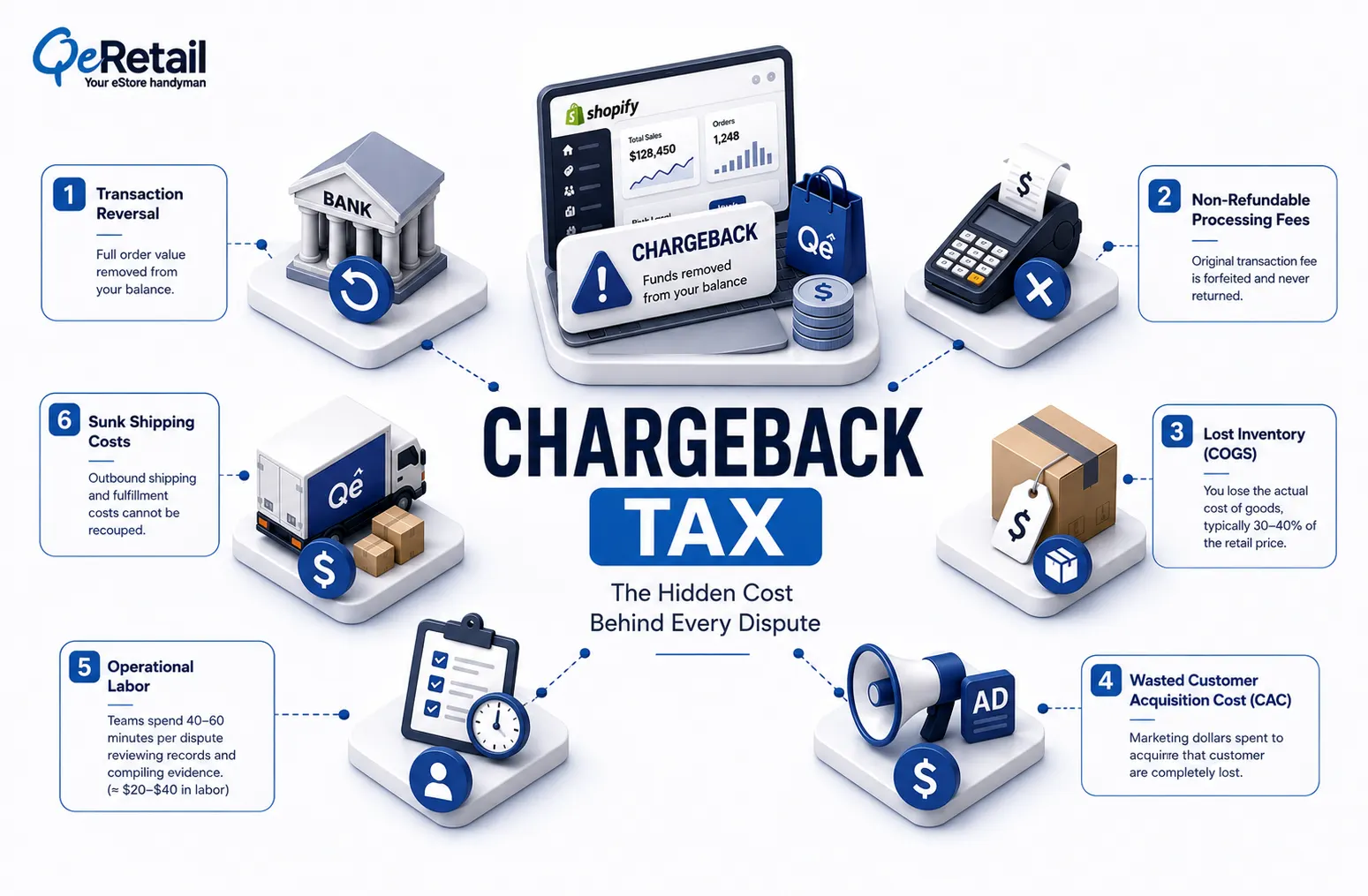
The “Chargeback Tax” is comprised of several compounding layers:
1. Transaction Reversal: The full order value is immediately yanked from your balance by the issuing bank
2. Non-Refundable Processing Fees: The original transaction fee is forfeited and never returned, even if you win the dispute.
3. Lost Inventory (COGS): Because physical products are rarely returned in a dispute, the merchant loses the actual cost of the goods, typically 30-40% of the retail price.
4. Wasted Customer Acquisition Cost (CAC): The marketing dollars spent on paid search or social media to acquire that specific customer are completely lost.
5. Operational Labor: Internal teams must spend 40–60 minutes per dispute reviewing records and compiling evidence, which costs an estimated 20–40 in labor.
6. Sunk Shipping Costs: Outbound shipping and fulfillment labor represent capital that cannot be recouped.
Why do Most Shopify Stores Notice Chargebacks Too Late?
Shopify merchants notice chargebacks late, and the cause is not weak reporting. The system is built around reactive cycles. Card network architecture and standard financial reporting are both slow by construction. Most merchants see a dispute in the dashboard only after the damage has landed.
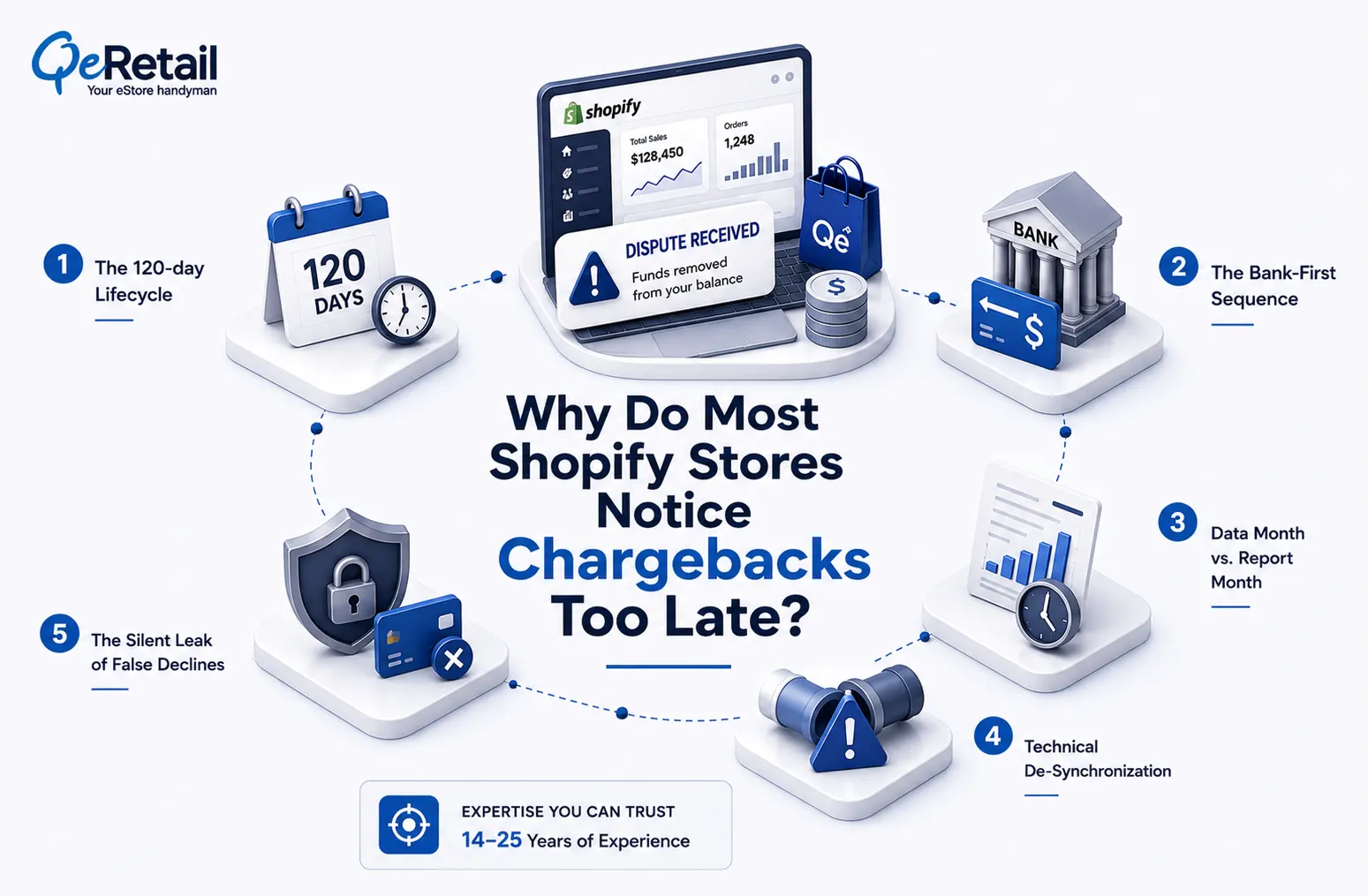
Call it the visibility gap. The money leaves first. The email arrives second. Your response window opens third, already narrowing.
1. The 120-day Lifecycle
Cardholders have up to 120 days after the transaction or fulfillment to dispute. A peak-season purchase may not reach a final ruling until June. Goods shipped, payout cleared, quarter closed. The liability stayed open.
Expert Take:
Settlement is not the end of a transaction. It is a provisional state that stays reversible for four months. Forecasting margin off gross Shopify Payments revenue means forecasting against money still legally in play.
Quick Wins:
- Hold 1 to 2% of monthly Shopify Payments volume in reserve. Not profit until day 121.
- Track disputes against the order month, not the month the dispute landed.
- Keep delivery confirmation, AVS/CVV results, and customer communication logs for 180 days.
2. The Bank-first Sequence
When a customer disputes, the issuer credits the cardholder and pulls the funds, plus a $15 Shopify fee, straight out of your balance. Only then does the notification reach you.
Expert Take:
This is not a Shopify limitation, it is card network design. Provisional credit is regulatory, not optional. The merchant is the last party in the chain to learn about their own money.
Quick Wins:
- Route dispute notifications to a shared inbox or Slack channel with an owner attached, not a founder’s personal email.
- Build the evidence packet in the first 48 hours.
- Reconcile payouts line by line weekly. Unexplained debits are usually disputes.
3. Data Month Vs. Report Month
Visa and Mastercard assess store health monthly, with lag baked in. You are told you crossed a threshold the month after the activity happened.
Expert Take:
By the time a monitoring notice lands, the breach is historical. You are not being warned, you are being informed. And remediation is judged on forward months.
Quick Wins:
- Calculate your ratio weekly: disputes ÷ transactions in the same period.
- Set an internal alarm at 0.4%, well under network thresholds.
- Segment the ratio by traffic source, product, and geography.
4. Technical De-synchronization
Early Fraud Warnings run on a separate pipeline from disputes, so the “early” warning often arrives after the formal dispute.
Expert Take:
Two pipelines, two clocks, no guaranteed ordering. Refund automation firing off EFW alerts can refund orders already in dispute, which means you pay twice.
Quick Wins:
- Verify live dispute status before acting on any EFW. Never refund blind.
- Refund flagged unshipped orders inside 24 hours.
- Log EFW timestamps against dispute timestamps and escalate with your processor.
5. The Silent Leak of False Declines
False declines never become sales and never become disputes. They just disappear. Stores tighten filters after a reserve conversation and block real customers, and that damage sits in authorization logs, not the dispute log.
Expert Take:
For most mid-market stores the false decline number is several times larger than the fraud number, and it compounds. Until approval rate sits next to chargeback ratio on the same dashboard, every risk decision is made with half the scoreboard visible.
Quick Wins:
- Track approval rate weekly. Treat a drop as a cost event.
- Review a sample of cancelled high-risk orders monthly.
- Apply rules by segment instead of blanket tightening.
What Closes The Gap?
Move off manual review toward real-time payment analytics and interception networks such as Visa RDR or Ethoca. Both surface a concern within hours, converting a dispute into a refund and taking it out of your ratio entirely.
The goal is not fewer chargebacks. It is knowing about them while you can still do something.
The Four-Layer Chargeback Defense Stack
Fraud prevention isn’t one tool. It’s four layers, and most stores build layer three first because that’s the layer a vendor sells them.
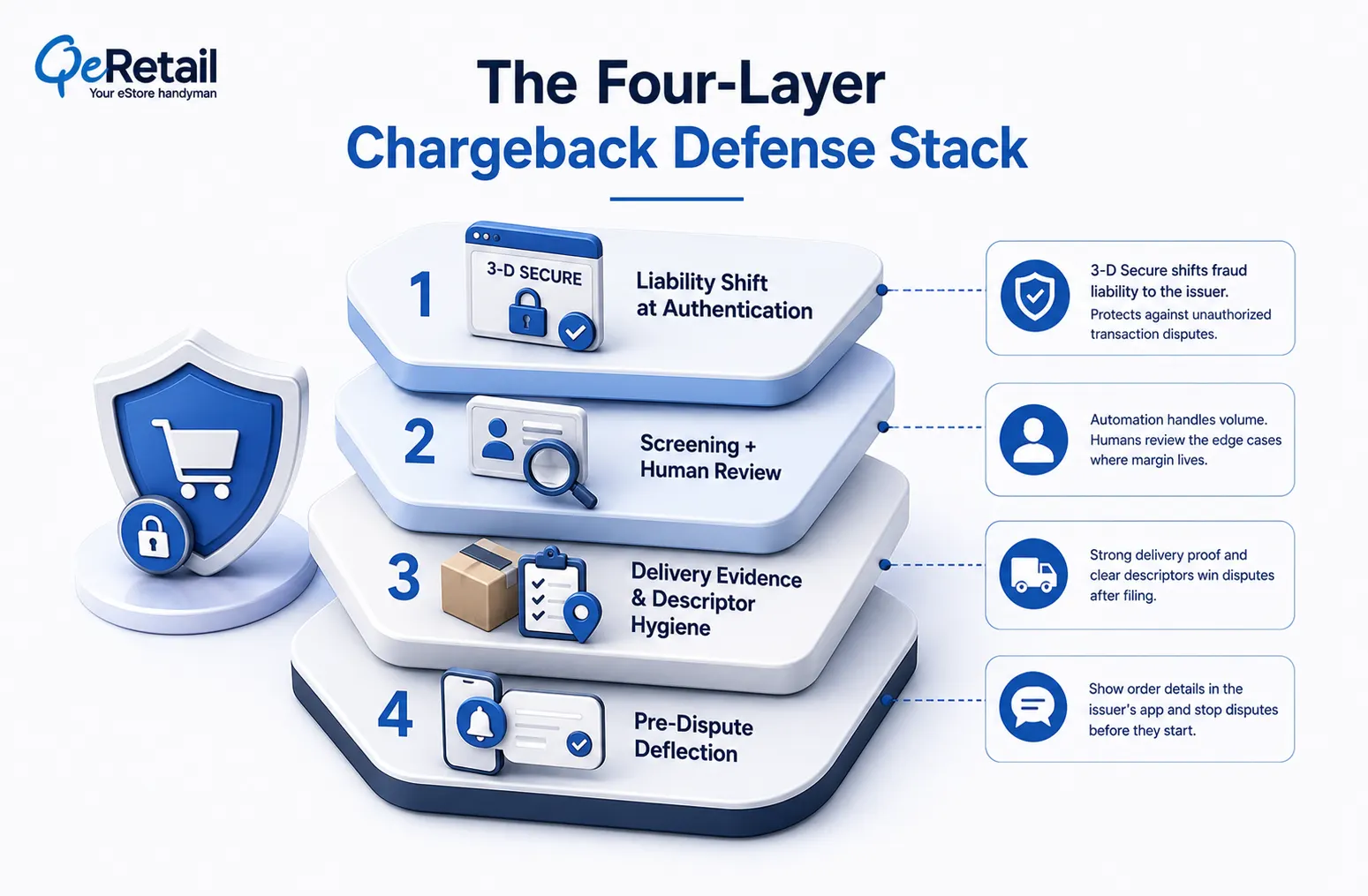
Layer 1: Liability Shift at Authentication
3-D Secure moves fraud liability to the issuer, making it the only control that removes the loss rather than reducing its odds. Friction costs conversion, though, so run it only where your dispute data points: first orders above AOV, expedited shipping, billing and shipping countries that disagree.
Note the limit 3DS covers unauthorized-transaction disputes only. Nothing for “item not received.” Stores that switch it on globally and watch the ratio barely budge had a fulfillment problem all along.
Layer 2: Screening Plus a Human Queue
Automation handles volume. A person handles the 2% it gets wrong in both directions, and that 2% is where your margin lives. At $100K–$500K it’s a 15-minute daily habit, not a hire: check order history, check whether the email domain and shipping address make sense together, release the false positives. Shopify’s fraud analysis is a signal, not a verdict canceling every medium-risk order is how stores quietly kill repeat purchase.
Layer 3: Delivery Evidence and Descriptor Hygiene
Wins disputes after filing, costs almost nothing. Tracking on everything. Signature confirmation above your threshold. A descriptor that reads like the brand on the package, not your LLC. That pack separates a 15% representment win rate from a 40% one.
Shopify Protect covers part of it, but narrowly: US Shopify Payments, Shop Pay, physical goods, tracking within seven days. If your average fulfillment time is nine days, your coverage is theoretical.
Layer 4: Pre-dispute Deflection
Order Insight and similar tools push transaction detail into the issuer’s app, so the customer sees your brand and their order contents at the moment they were about to file. No fee, no ratio impact, no representment work.
These sit behind your processor rather than being sold directly, which is why most owners never learn they exist. Ask yours what deflection your account has. The answer is often “we support it, nobody enabled it for you.”

Stop Absorbing the Tax. Start Pricing the Risk.
Most owners think the choice is fraud losses versus conversion friction. That framing is what keeps a store stuck at the same dispute rate three years running.
Added a fraud app and the rate barely moved? You bought a filter, not a defense. Stores that actually cut the tax did the unglamorous work first: descriptor, fulfillment window, evidence templates, then bought tooling for the residual risk. Every layer underneath the tool makes the tool cheaper and sharper.
Your payment processor will make that call for you eventually. It’s whether you build while your ratio is healthy, or after a reserve lands on your account.
Not sure which layer you’re missing? Book a strategy consultation with QeRetail. We’ll audit your reason codes, fulfillment SLA, and false decline rate, then tell you which single fix returns the most revenue at your volume.
Frequently Asked Questions
What Is A Good Chargeback Rate For A Shopify Store?
Does Shopify Protect Cover All Chargebacks?
How Much Does A Chargeback Actually Cost My Store?
Is Friendly Fraud The Same As First-Party Misuse?
How Long Does It Take To Reduce Chargebacks?
Table of Contents