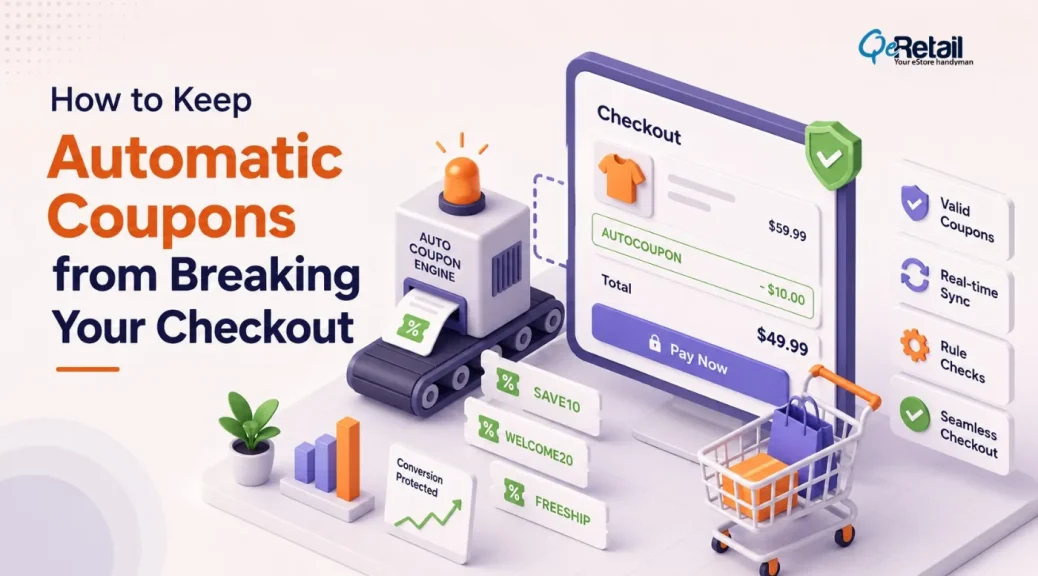
Your automatic discounts may be configured correctly, active in Shopify, and working exactly as intended, yet customers can still abandon their carts before completing a purchase.
For many growing eCommerce businesses, the problem is not that automatic coupons fail to apply. It is that customers become uncertain about when, why, or whether the promised discount has actually been applied during their shopping journey.
As per the report by Baymard, customers become frustrated when discounts, shipping offers, and promotional rules interact in ways that are difficult to understand, creating unnecessary hesitation during checkout.
Customers rarely understand the technical reason behind a missing or changing discount. They simply see a price that doesn’t match their expectations, pause to verify the offer, or abandon the purchase altogether.

Key Action Points Summary
- Validate automatic discount eligibility
- Reduce conflicting promotion rules
- Display discounts consistently across the storefront
- Test coupon behavior on mobile devices
- Review third-party discount applications
- Monitor discount stacking logic
- Verify shipping and coupon interactions
- Audit promotional messaging regularly
- Test checkout after every campaign update
- Review coupon performance using customer session recordings
Quick Wins: Review Your Automatic Coupons Before Launching Your Next Campaign
Before creating another promotional offer, begin with these practical checks.
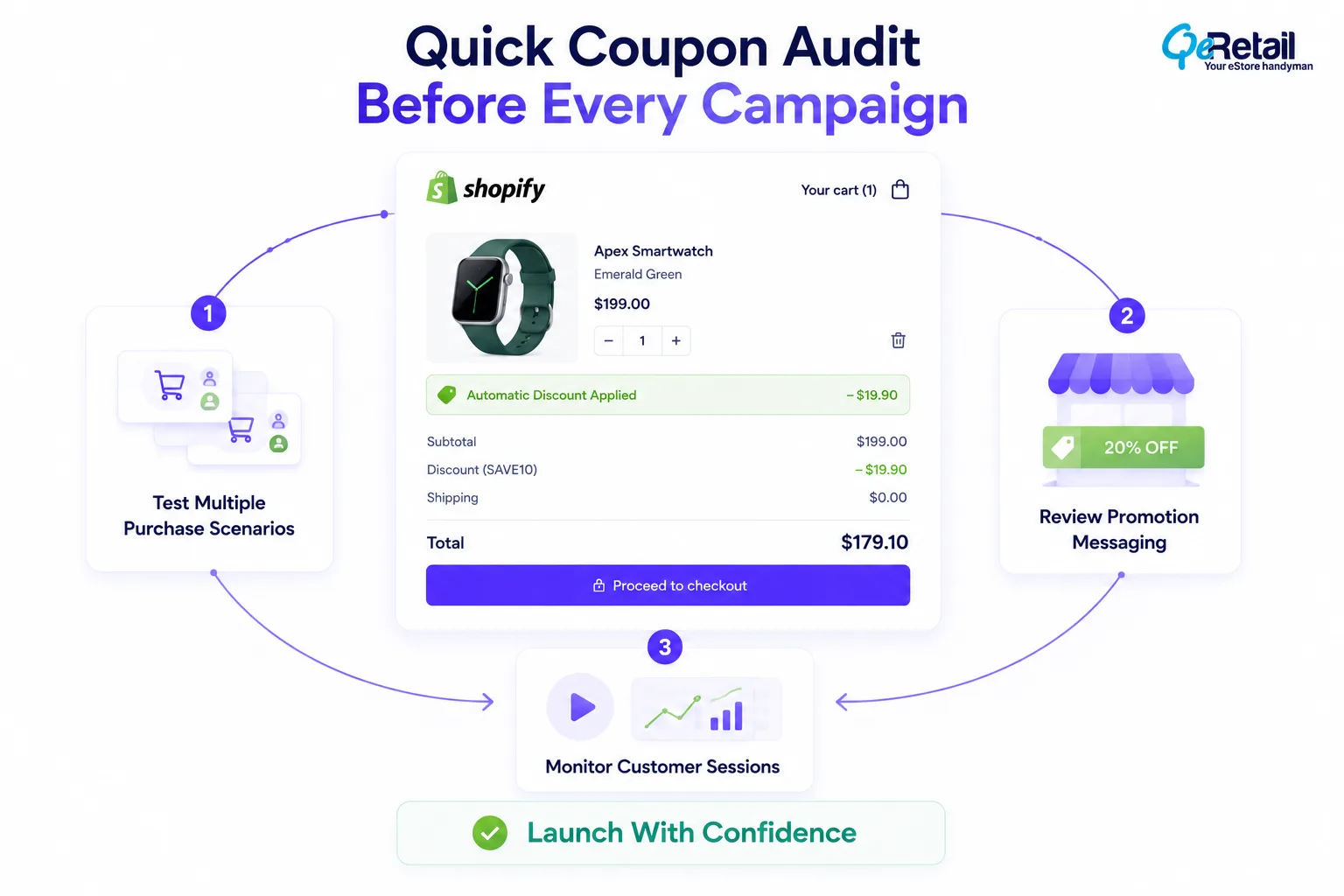
1. Complete Purchases Using Different Customer Scenarios
Test your automatic coupons using different products, quantities, customer accounts, shipping locations, and devices.
Many discount issues only appear under specific purchase conditions.
2. Compare Promotional Messaging Across Every Customer Touchpoint
Customers should see the same offer on collection pages, product pages, the cart, and checkout.
Even small differences in promotional wording can create unnecessary hesitation.
3. Monitor Session Recordings During Promotional Campaigns
Analytics explain what customers do.
Session recordings often reveal why they stop.
Watching real customer behavior frequently uncovers coupon-related friction that traditional reports never identify.
Why Automatic Coupons Quietly Become a Conversion Problem?
Automatic discounts are designed to simplify the buying experience by rewarding customers without requiring manual coupon codes.
As promotional strategies become more sophisticated, however, the underlying discount logic often becomes more difficult to manage. Multiple campaigns, customer segments, shipping incentives, product exclusions, and third-party applications all influence how discounts behave throughout the shopping journey.
Research from Salesforce’s State of the Connected Customer shows that 88% of customers say the experience a company provides is as important as its products or services. When promotional experiences become inconsistent, customer confidence can decline even before payment begins.
In many storefront reviews, we find that automatic coupons are technically functioning as configured. The challenge is that customers experience pricing changes they do not fully understand, creating hesitation during the final stages of purchase.
The objective is to build discount experiences that remain consistent, predictable, and easy for customers to trust.
5 Hidden Coupon Friction Points That Quietly Increase Cart Abandonment
Most automatic coupon problems appear through small inconsistencies that interrupt customer confidence after shoppers have already decided to buy. These moments rarely generate system errors, but they frequently create enough uncertainty for customers to reconsider their purchase.
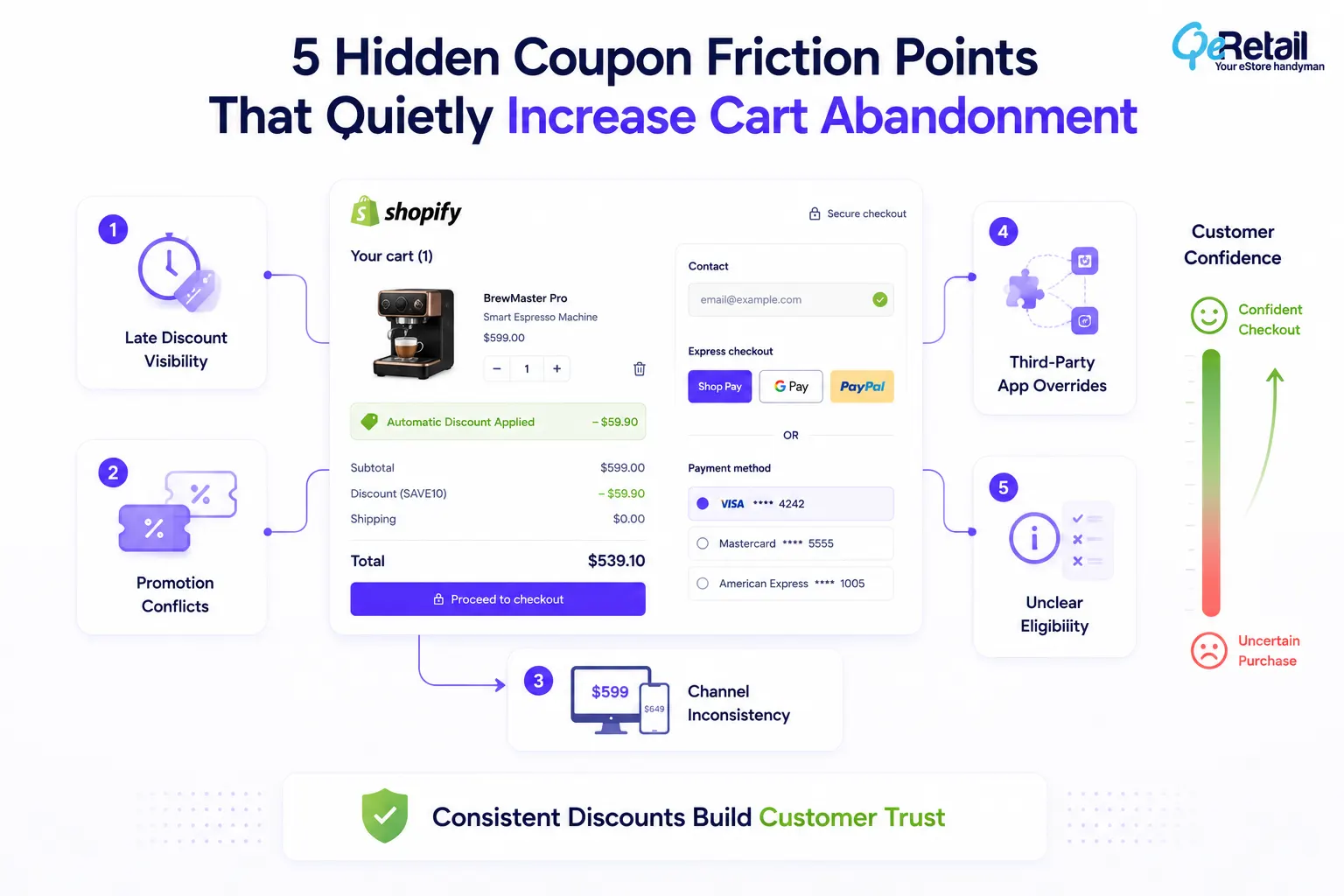
1. Automatic Discounts Apply Too Late In The Buying Journey
Many stores wait until customers reach the cart or checkout before displaying automatic discounts.
While the pricing may technically be correct, customers often spend the entire shopping journey wondering whether the advertised promotion will actually apply. Some leave the cart to verify campaign conditions, while others begin searching for manual coupon codes that do not exist.
This uncertainty becomes more noticeable during seasonal promotions where customers expect immediate confirmation that they are receiving the advertised offer.
What Should Businesses Do To Improve?
- Display automatic discounts on product and cart pages.
- Confirm eligibility before checkout begins.
- Explain discount conditions beside promotional banners.
- Reduce uncertainty throughout the buying journey.
Quick Wins:
Review your storefront as a first-time customer. If shoppers only discover their discount after entering checkout, consider surfacing that confirmation much earlier.
2. Multiple Promotions Quietly Compete With Each Other
As promotional campaigns grow, stores often introduce automatic discounts alongside loyalty rewards, free shipping offers, bundle pricing, subscription discounts, and seasonal promotions.
Each campaign may function correctly on its own. The friction appears when customers expect offers to work together but discover that one promotion replaces another without explanation.
Instead of feeling rewarded, shoppers begin calculating which offer provides the better value or questioning whether the pricing is correct.
What Should Businesses Do To Improve?
- Review promotion priority rules regularly.
- Clearly explain which discounts can be combined.
- Minimize overlapping campaign objectives.
- Keep promotional logic easy for customers to understand.
Quick Wins:
List every active promotion currently running on your store. Then identify where two offers influence the same products or customer segment without clear communication.
3. Automatic Coupons Behave Differently Across Shopping Channels
Today’s customers rarely follow a single path before making a purchase. They may discover a product through Google Shopping, return from an email campaign, browse on social media, or revisit the store using a saved cart.
The challenge appears when automatic discounts behave differently across these touchpoints. A promotion visible on the landing page may not immediately appear in the cart, or a returning customer may see pricing that differs from what they expected based on an earlier session.
Customers often assume the promotion is no longer valid rather than considering the technical conditions behind it.
What Should Businesses Do To Improve?
- Test promotions across all customer acquisition channels.
- Validate discounts for returning customer journeys.
- Keep promotional messaging consistent across campaigns.
- Review pricing behaviour after abandoned cart recovery.
Quick Wins:
Complete the same purchase journey through your email campaign, paid advertisement, and direct website visit. Every customer should experience the same promotion under the same eligibility conditions.
4. Third-Party Apps Quietly Override Discount Logic
As stores grow, discount strategies often rely on loyalty platforms, subscription tools, bundle applications, product recommendation engines, and shipping solutions. Each integration adds value, but together they can influence how automatic discounts are calculated.
Many merchants assume Shopify’s automatic discount is responsible when promotions behave unexpectedly. In reality, another application may be modifying cart conditions, recalculating prices, or introducing additional validation rules before checkout.
These interactions rarely generate visible errors, making them difficult to identify through standard testing.
What Should Businesses Do To Improve?
- Review every application that modifies cart pricing.
- Test discounts after installing new promotional apps.
- Document how each pricing integration affects checkout.
- Remove overlapping discount functionality where possible.
Quick Wins:
After every new app installation, complete a promotional purchase using your most common discount scenario. This helps identify integration conflicts before customers encounter them.
5. Customers Understand the Offer, But Not Why They Didn’t Receive It
One of the most overlooked causes of cart abandonment is poor communication around discount eligibility.
Customers may see a promotion advertised across the storefront, add products to their cart, and only discover later that specific items, collections, customer groups, or purchase thresholds are excluded. From the customer’s perspective, the automatic coupon appears broken, even though it is functioning according to its configuration.
The issue is rarely the discount itself. It is the lack of transparency before customers invest time building their cart.
What Should Businesses Do To Improve?
- Display eligibility requirements alongside promotional offers.
- Explain exclusions before customers reach checkout.
- Highlight minimum purchase conditions clearly.
- Keep promotional language simple and consistent.
Quick Wins:
Ask someone unfamiliar with your current promotion to explain how the offer works after reading your campaign banner. If they cannot accurately describe the eligibility rules, your messaging needs more clarity.
How QeRetail Helps Businesses Optimize Automatic Coupon Performance?
Successful promotional campaigns depend on more than creating attractive offers. They require consistent discount behaviour across the entire shopping journey.
QeRetail helps eCommerce businesses identify hidden coupon friction that affects customer confidence, pricing consistency, and conversion performance.
1. Automatic Discount Assessment
We evaluate how automatic coupons behave across product pages, cart, checkout, and post-purchase experiences to identify inconsistencies that may influence customer decisions.
2. Promotion Rule & Integration Review
Our team analyzes Shopify configurations, third-party applications, loyalty platforms, shipping rules, and promotional logic to ensure every discount works as intended without unnecessary conflicts.
3. Customer Journey Validation
We simulate real purchasing scenarios across different devices, customer segments, acquisition channels, and order conditions to uncover issues that standard functional testing often overlooks.
4. Conversion-Focused Promotion Optimization
Our recommendations focus on making promotional experiences more transparent, predictable, and easier for customers to trust while preserving the flexibility businesses need to run successful campaigns.

Conclusion
Automatic coupons should remove friction from the buying journey, not introduce new reasons for customers to hesitate. As promotional strategies become more advanced, maintaining consistency across pricing, messaging, and checkout experiences becomes just as important as the offer itself.
QeRetail helps eCommerce businesses improve promotional performance through technical assessments, customer journey validation, and conversion-focused optimization strategies. Our team identifies the hidden interactions between discounts, integrations, and customer behaviour that quietly affect completed purchases.
Contact us to build a promotional experience that customers can trust from the first offer to the final checkout.
Frequently Asked Questions
Why Are Customers Abandoning Their Cart Even When Automatic Discounts Are Active?
Can Third-Party Apps Affect Automatic Coupon Performance?
How Often Should Automatic Discounts Be Tested?
Why Do Customers Think an Automatic Coupon Is Broken?
How Can Businesses Improve Automatic Coupon Performance?
Table of Contents